
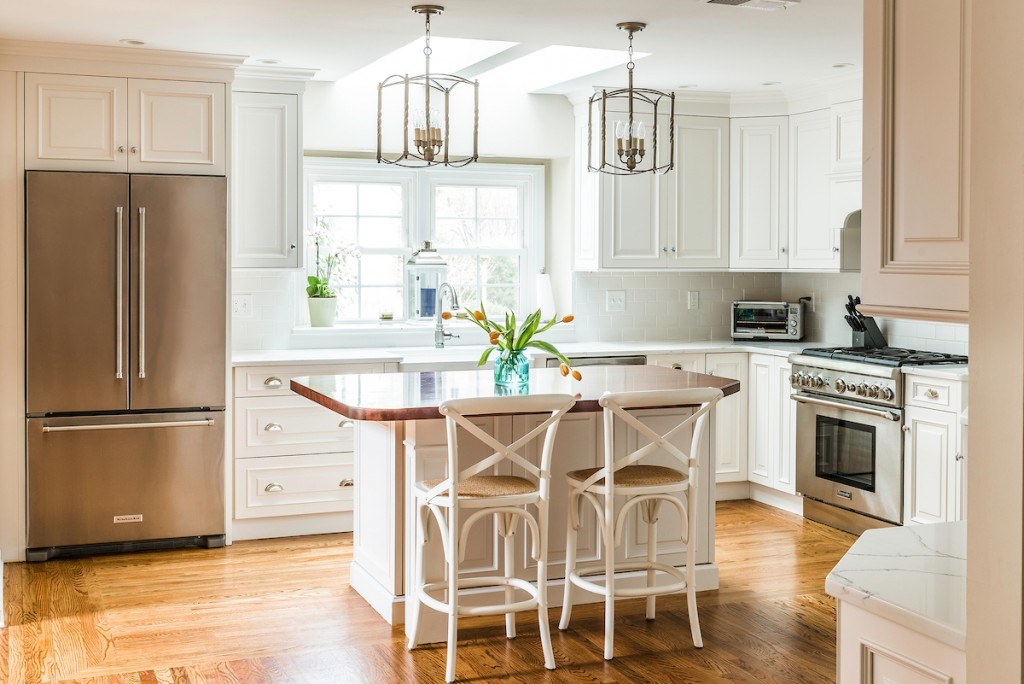
Pricing
What Does “Fixed-Price” Remodeling Actually Mean in Southeastern PA?
What a fixed-price contract really means, how it differs from cost-plus and allowance-based, and the honest tradeoffs.
Not ready for a call? Send us a quick question
Last updated: May 2026 · Alex Smearman, Fedor Fabrication
Key Takeaways
- Fixed-price sets the total before construction. The contractor — not you — carries overrun risk. Price changes only via a signed change order.
- Allowance-based contracts show one total but bury placeholders (“$12,000 cabinet allowance”) that almost always grow $5K–$20K once selections finish.
- A real fixed-price proposal needs 6–10 weeks of design, selections, and trade pricing before signing. That work is the only reason the number doesn’t move later.
- PA caps deposits at one-third of contract value on non-custom-material projects. Every change order is signed before the work happens.
- Fedor uses fixed-price, four-payment milestones, and a COPE model with a visible project-management line (3–5% of contract value). PA HIC #PA202519.
Quick Answer
A fixed-price (or lump-sum) remodeling contract means the total is written down before construction begins. No hourly rates, no open-ended allowances, no surprise charges. The price changes only via a documented scope change — a change order.
The Landscape
The Three Contract Types You’ll See
Every bid you collect uses one of three structures — and the structure decides who pays when reality differs from the estimate.
| Pricing Model | How It Works | Who Bears Overrun Risk | Best For |
|---|---|---|---|
| Fixed-Price | Every material specified before signing. One total. Changes via written change order only. | Contractor. Labor or sub overrun is their problem. | Kitchen and bath remodels in 1980s–2000s homes where you want budget certainty. |
| Allowance-Based | Stated total, but key categories are placeholders (“$12,000 cabinet allowance”). You pay the gap on every selection. | Homeowner. Every selection over allowance is your cost, usually with a labor upcharge. | Marketed as default. Fine only when allowances are tiny and late-stage (paint, hardware). |
| Time-and-Materials | Actual labor hours + invoices + 15–25% markup. Usually no ceiling. | Homeowner — fully. Project costs whatever it costs. | Small handyman work or true gut-renos of 1900s homes where too much is unknown for an honest fixed price. |
For most kitchen and bath remodels in 1980s–2000s homes, T&M is wrong — it puts all risk on you and removes the contractor’s incentive to be efficient.
The number on the contract is the number you pay. That’s the entire point of fixed-price — and most contracts in our market can’t honestly make that claim.
Our Process
How a Real Fixed-Price Contract Gets Built
To give you a number that doesn’t move, we do the work allowance-based contractors push to after the deposit:
| Phase | Duration | What Happens |
|---|---|---|
| 1. Site visit | 1–2 wks | Measurements, scope conversation, ballpark range. No proposal yet. |
| 2. Design | 2–4 wks | Layout, 3D renderings, structural review if a wall is moving. |
| 3. Selections | 2–4 wks | Every fixture, tile, cabinet door specified by brand, SKU, finish. You visit Weinstein Supply, Avalon Flooring or The Tile Shop, Gerhard’s Appliances, and our showroom. |
| 4. Trade pricing | overlaps | Our plumber and electrician walk the panel and joist direction, quote real numbers. |
| 5. Line-item proposal | 1 wk | Every category gets its own line: demo, cabinetry by brand, countertops by stone, tile by SKU, plumbing rough-in, electrical, drywall, paint, fixtures, permits, design, project management. |
That’s 6–10 weeks before you sign. Allowance-based contractors quote in one visit — fast because they haven’t figured out what they’re building. The figuring-out happens later, on your dime.
“Fixed-Price With Allowances” Is a Contradiction
Some contractors use “fixed-price” loosely — one total at the bottom, six allowance lines inside. Cabinets: $12,000. Tile: $5,000. Plumbing: $1,500. Appliances: “by owner.” That’s allowance-based with a fixed-price label.
The math: final cabinets at $19,000 means you pay the $7,000 gap. Tile at $8/sq ft instead of $4 doubles that line. Walk into Ferguson in King of Prussia and pick real lighting, and the $800 allowance disappears. By selections-done, you’ve added $10K–$20K to a “fixed” contract.
Categories where allowances hide future cost growth:
- Cabinetry — biggest gap. “$12,000 allowance” almost guarantees final $5K–$10K higher.
- Tile — flat per-sq-ft allowance guarantees builder-grade selections.
- Plumbing fixtures — “$1,500 for all bathroom fixtures” rarely covers what you want.
- Lighting — kitchen island pendants alone often blow past a low lighting allowance.
- Countertops — per-sq-ft hides edge profile, sink cutouts, seam fabrication.
- Appliances — “by owner” quietly shifts $3K–$15K onto you.
A reasonable allowance is a $50 paint-color or $300 hardware-style line. The trap is any allowance on a category over 5% of the budget. See red flags when hiring a contractor.
Does Fixed-Price Always Cost More? Often It Doesn’t.
Fixed-price bids usually look higher on paper — but the two bids aren’t pricing the same thing. A real-shaped comparison on a Downingtown pull-and-replace kitchen:
| Line | Allowance Bid | Fixed-Price Bid | Final Reality (Allowance) |
|---|---|---|---|
| Cabinetry | “$12,000 allowance” | $18,500 specified | $19,000 (+$7,000) |
| Countertops | “$3,500 allowance” | $5,200 specified | $5,400 (+$1,900) |
| Tile backsplash | “$4/sq ft” | $1,850 specified | $1,800 (+$1,800 hidden) |
| Plumbing fixtures | “$1,500 allowance” | $2,800 specified | $2,650 (+$1,150) |
| Lighting | “$800 allowance” | $1,400 specified | $1,500 (+$700) |
| Appliances | “By owner” | $7,200 included | Owner buys $7,500 (+$7,500) |
| Permits | “By owner” | $850 included | Owner pulls $850 (+$850) |
| Panel upgrade | Not in scope | Included | Day 3 change order $2,400 (+$2,400) |
| Stated contract | $42,000 | $54,000 | |
| True out-of-pocket | $65,750 | $54,000 |
The “cheaper” contract cost $11,750 more — not because the contractor was dishonest, but because the structure pushed every unspecified cost onto the homeowner. Sometimes the lowest bid genuinely is lowest, even after filling gaps. The point: you can’t compare bids honestly until they price the same scope. Both landed in the Pull-and-Replace tier from our kitchen cost guide. Only one told you that before you signed.
When Can a Fixed-Price Contract Change? Change Orders.
The price changes only through a written, dated, numbered change order signed by both parties before the work begins. Two triggers:
- Homeowner-requested upgrade. You decide mid-project to add heated floors. We price it, you approve in writing, the contract adjusts.
- Unexpected condition behind a wall. Demo uncovers rotted subfloor, galvanized drain lines, or asbestos in 1980s flooring. We stop, document, price the work, and you approve before we proceed.
On a Media remodel, the original sheet flooring tested positive for asbestos. We told the homeowner same-day, brought in licensed specialists for abatement (we’re not trained or insured for it), and signed the change order before anyone touched the floor. Four days added, not four weeks. Fixed-price doesn’t mean rigid — it means you’ll always know, and agree, before you owe.
How Payment Works: Milestone Schedule
Payments tied to construction events, not hours billed or calendar dates. Every Fedor project uses the same four payments:
| Payment | Trigger | Funds |
|---|---|---|
| 1. Deposit at signing | Contract signed | Material orders, especially custom cabinetry (4–6 wk lead times from Shiloh, Great Northern). |
| 2. Start of work | Crew on-site, demo begun | Tradespeople and first-phase materials. |
| 3. Mid-project | Tile complete (bath) or cabinets installed (kitchen) | Back-half materials and labor. |
| 4. Substantial completion | Final walkthrough | Punch-list closeout. |
Anchored to events you can watch. If an inspector is out two weeks or a cabinet order runs late, the schedule shifts — you never pay ahead of completed work.
Deposit rule: Pennsylvania’s Home Improvement Consumer Protection Act caps deposits at one-third of contract value on non-custom-material projects. Larger advances are normal only for custom cabinetry or custom-fabricated stone — items that can’t be returned. Any contractor demanding more than one-third on a standard remodel is a red flag.
What Fixed-Price Doesn’t Cover
Strongest financial protection a homeowner can get — but not infinite:
- Hidden conditions. Rotted subfloor, asbestos in 1980s flooring, polybutylene plumbing, an undersized panel — none visible during design. Change-order process handles them honestly, but they’re real costs.
- Homeowner-caused delays. If selections take eight weeks instead of three, the schedule shifts. The price doesn’t change.
- Weather and inspections. A storm or an inspector out two weeks adds calendar time, not cost.
- Scope you change after signing. Adding heated floors, swapping tile two weeks before install — all priced and approved before work proceeds.
- Reduced mid-project flexibility. The genuine downside. Changing your mind means a priced, signed change order — not a casual “can you just swap that.” Friction that protects your budget.
How the Number Is Built
How Fedor Builds Its Numbers: COPE Pricing
Most contractors use cost-plus markup — hard costs plus a percentage, baked into inflated material and labor lines so you can’t see project management or design as their own numbers. Fedor uses a COPE-influenced model (Cost of Procurement and Execution, adapted from commercial construction): project management is a separate, visible line, currently 3–5% of contract value. Other contractors charge the same total; they just don’t show where it goes.
Why Most Contractors Don’t Offer Fixed-Price
Search “remodeling complaints” and the story repeats: the number grew, the job ran long, the homeowner paid 20–40% more than the contract said. The reason is structural, not moral. To offer real fixed-price, a contractor has to:
- Slow the sales cycle from one week to 6–10 weeks.
- Invest in design and selections labor before there’s a signed contract.
- Hold tight showroom relationships (Weinstein Supply, Avalon Flooring, Gerhard’s, Ferguson) to price without ordering.
- Have subs who quote real numbers off a site walk.
- Carry the overrun risk themselves — requiring pricing discipline and tight margins.
Most independent remodelers are two-person shops. They can’t absorb six weeks of unpaid pre-contract work for a job that might not close, so they quote fast and use allowances or T&M to push unknowns onto you. If contract creep has burned you before, that’s the structural reason — not your fault.
In Our Experience
What We Tell Clients at the Kitchen Table
- Don’t compare bottom-line numbers until both bids price the same scope — appliances, permits, panel work, the real cabinet you want. A lower number missing $20K of scope is a deferred bill.
- Read every contract for the word “allowance.” Treat any allowance on cabinetry, countertops, tile, or appliances as a future change you haven’t been told the price of yet.
- Ask directly: “Is the number on this contract the number I’ll pay?” Listen for a clean answer or a hedge.
Some readers will hire someone else — that’s fine. We’d rather you take these three questions to a competitor and get a good result than sign with anyone without understanding what you signed. See Are We the Right Fit? for the honest version of who we serve well and who we don’t.
Common Questions
Frequently Asked Questions
Are fixed-price remodeling contracts more expensive?
Usually not, once you compare true out-of-pocket. A fixed-price proposal looks higher because it includes appliances, permits, panel upgrades, and fully specified materials. A cheaper-looking bid defers those into change orders and allowance overages. On a recent Downingtown kitchen, the “$42,000” allowance bid finished at $65,750. The $54,000 fixed-price bid finished at $54,000.
What deposit is reasonable for a fixed-price remodeling contract?
No more than one-third of the contract price on non-custom-material projects — the cap set by Pennsylvania’s Home Improvement Consumer Protection Act. Larger advances are normal only for custom cabinetry or fabricated stone that can’t be returned. The contract should state the PA HIC registration, total price, scope, and your cancellation right. A contractor demanding 50% up front on a standard remodel is a red flag.
Should I just pick the lowest remodeling bid?
Not until every bid prices the same scope. A lower number that excludes appliances, permits, or panel upgrades — or uses allowances for cabinetry and tile — usually isn’t lower. It’s a deferred bill that arrives one selection at a time. Run every bid through the same line items first; our guide on what’s included in a remodeling estimate has the worksheet.
Sources
- PA Home Improvement Contractor Registration Search — verify any contractor’s PA HIC. Fedor: PA HIC #PA202519.
- NARI Code of Ethics — industry standard for contract completeness.
- AIA Contract Documents — A101 (fixed-price) and A102 (cost-plus with GMP) owner-contractor agreements.
- BBB — Hiring a Contractor — consumer guidance on deposits and contract review.
Next Step
Want to See What a Fixed-Price Proposal Looks Like?
You should be able to ask any contractor: is the number on this contract the number I’ll pay? — and get an honest answer. No pressure, no obligation — whether you hire us or someone else, the right contractor will welcome the question.
Or call us directly: 610-431-7150 · PA HIC #PA202519