
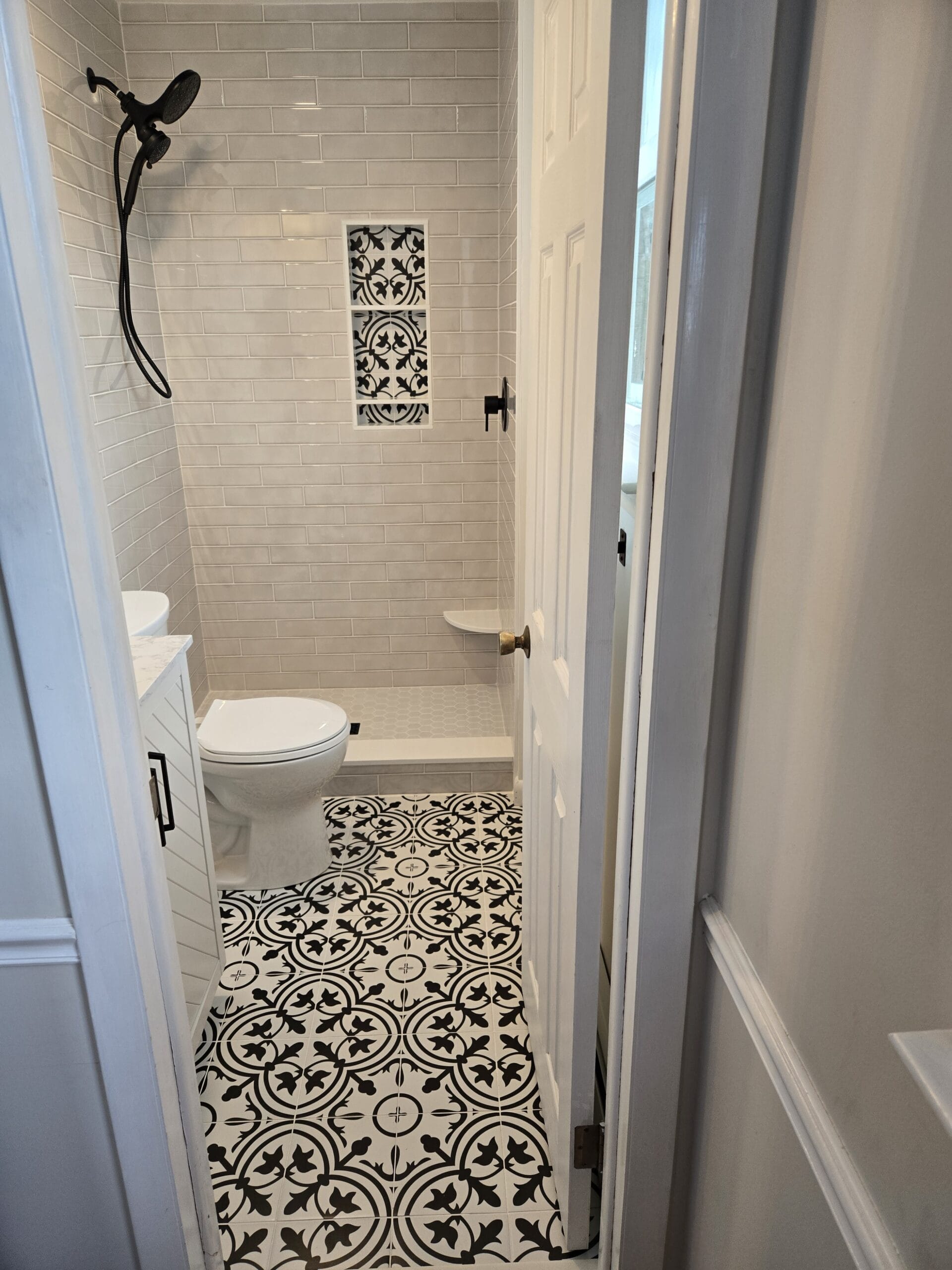
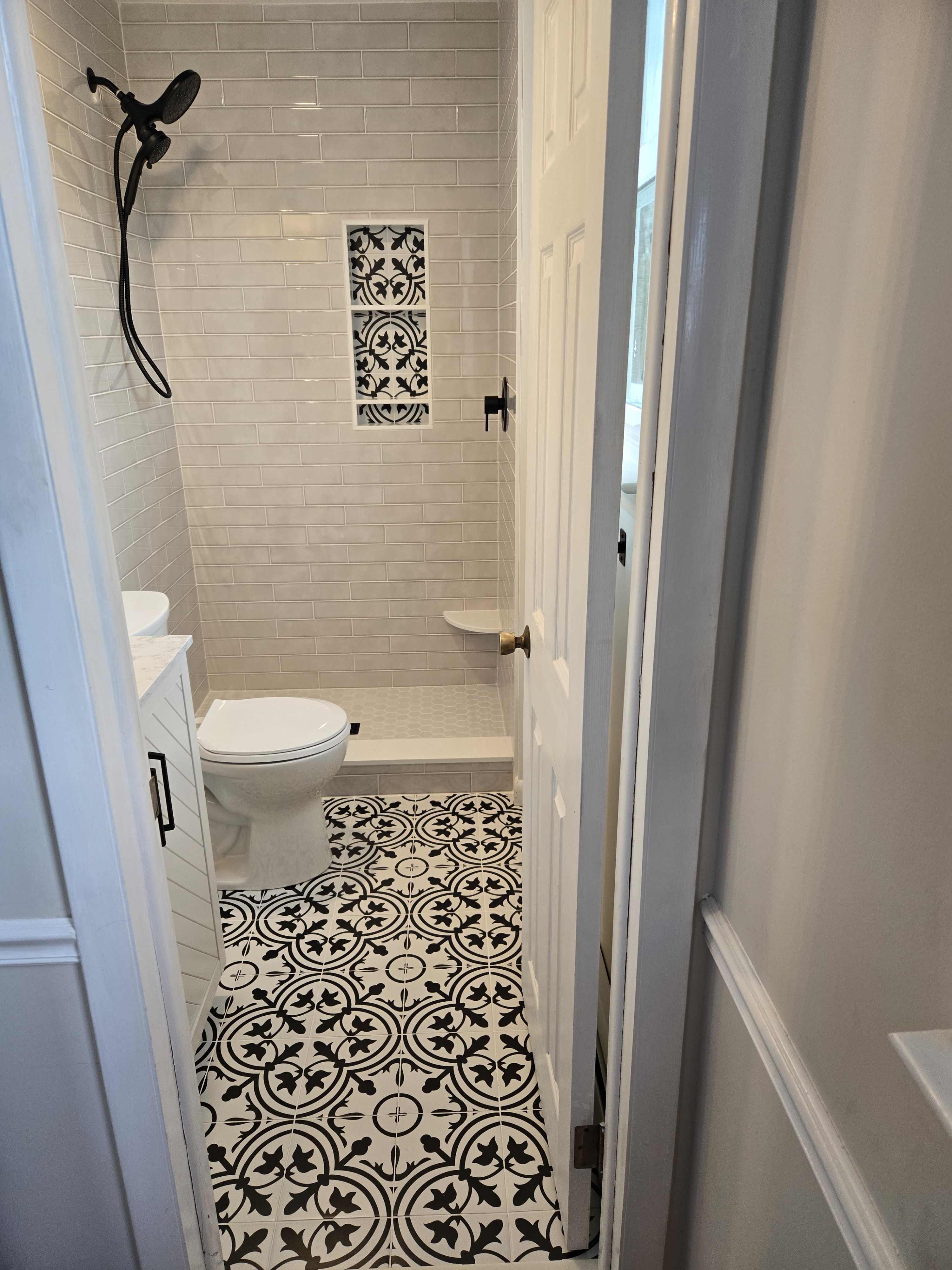
Comparison
Tub-to-Shower Conversion vs. Full Bathroom Remodel: Which Is Right for You?
When a targeted conversion is the smart money — and when it pays to do the full bathroom.
Not ready for a call? Send us a quick question
Last updated: May 2026 · Alex Smearman, Fedor Fabrication
Two scopes, two very different numbers: conversion standalone $12,000–$25,000+; conversion folded into a larger job $8,000–$15,000; full bathroom remodel $35,000–$65,000. A “tub-to-shower conversion” pulls the tub and surround and builds a tiled walk-in shower in the same footprint — vanity, flooring, toilet, and layout stay. The real decision isn’t price — it’s whether replacing only the tub solves your problem or postpones the rest.
Key Takeaways
- Standalone conversion: $12,000–$25,000+. Folded into a larger job: $8,000–$15,000. Full remodel: $35,000–$65,000; master with layout changes: $50,000–$90,000+.
- Kitchen-table rule: if you can count more than two things you’d change, you’re doing a full remodel and starting with the shower.
- The shower itself costs about the same either way. A full remodel adds $20K–$40K of other work — floor, vanity, electrical. If those don’t need replacing, you’re buying work you didn’t need.
- Resale “keep one tub” rule: never convert your only tub if you might sell to families with young kids. 3-bath home: convert the primary, keep a hall tub. 2-bath: think hard.
- Snowball trap: a conversion that uncovers rotted subfloor, galvanized lines, or joist deflection balloons mid-project. Carry a 15–20% contingency on any pre-2000 home.
- Aging in place rarely means “full remodel.” A conversion plus the $3,000–$8,000 add-on package is often smarter.
The Decision
Conversion or Full Remodel?
Conversion when the tub and surround are the only things you don’t like and every other system is sound. Full remodel when two or more elements need work, the layout doesn’t function, you’ve found water damage, or the home is 25+ years old with original plumbing.
| Choose a Conversion If… | Choose a Full Remodel If… |
|---|---|
| Tub and surround are the only things you dislike | Two or more elements need work (tile + vanity, vanity + plumbing, layout + tile) |
| Layout works for how you use the room | Layout doesn’t function — tiny vanity, awkward door swing, no storage, one sink for two people |
| Tile and floor in good condition | Tile is cracked, stained, dated, or pulling off the wall |
| Vanity and countertop are fine or recently updated | Vanity is original to the house and 20+ years old |
| Plumbing isn’t original galvanized or polybutylene | Home was built before 2000 and plumbing has never been updated |
| Electrical meets current code (GFCI, dedicated circuit) | One 15-amp circuit serves everything with no GFCI |
| No evidence of water damage | You’ve found water damage or a home inspector flagged moisture |
| You’ll be in this house another 5–10+ years | You’ll be in this house another 15–30+ years |
| Budget tops out around $15K–$25K | Budget allows $35K+ to do it once |
| Solving a single problem | Solving multiple problems at once |
Quick definitions: galvanized steel supply lines (pre-1970s) corrode from the inside — low water pressure is the tell. Polybutylene is gray plastic pipe (1978–1995) that becomes brittle and fails without warning. GFCI outlets are required in every bathroom under the PA UCC.
The rule we use at the kitchen table: If you can count more than two things you’d change, you’re not doing a conversion — you’re doing a full remodel and starting with the shower. A conversion that should have been a remodel often gets torn back out within five years.
On a recent West Chester bath, the homeowner wanted just the conversion. Walking the room, the overlap got obvious: same demo, plumbing access, permit, disruption — with a 25-year-old vanity, tired floor tile, and wrong lighting waiting their turn. She scoped up to a full remodel.
Scope Breakdown
What’s in Each Scope
Conversion ($8K–$15K inside a larger job; $12K–$25K+ standalone): tub removal (cast-iron usually cut apart in place — 300–500 lbs won’t fit through a door whole); new shower base or curbless pan; tile on shower walls and floor; new mixing valve, showerhead, optional hand-held; drain relocation (almost always — 30-inch tub drain to a 36-inch-plus shower); Schluter Kerdi waterproofing; glass enclosure; permit and inspection. What stays: vanity, countertop, faucet, toilet, floor tile outside the shower, lighting, fan, paint. Curbless shower has no lip to step over (continuous floor, sloped subfloor, linear drain). Schluter Kerdi is sheet-membrane waterproofing bonded behind the tile — replaces the tar-paper-and-mortar method that fails in 10–15 years.
Full bathroom remodel ($35K–$65K hall/moderate primary; $50K–$90K+ master with layout changes — see our Master Bath and Full Bath tiers). Everything above, plus new floor tile through the whole room, new vanity/countertop/faucet/toilet, new mirror/lighting/fan/hardware, plumbing and electrical to current PA UCC code, drywall/paint/trim, and optional heated floor, freestanding tub, frameless glass, doorway widening, or layout change.
The compounding effect of scope is what nobody explains. When the crew is already on-site, every added line costs less — demo is there, the plumber is roughing in the whole room, the tile setter is mobilized for the floor. That’s why the same conversion is $8K–$15K inside a remodel and $12K–$25K standalone.
The Numbers
Line-by-Line Cost Comparison
Roughly two to four times the cost — for four to five times the scope. Comparison for a 50 sq ft hall bath in a 1990s home.
| Line Item | Standalone Conversion | Full Bath Remodel |
|---|---|---|
| Demo | $1,500–$3,000 | $4,000–$6,500 |
| Subfloor / framing repair (if found) | $500–$2,500 | $500–$3,000 |
| Plumbing rough-in | $1,500–$3,500 | $3,000–$6,000 |
| Electrical / code update | $300–$800 (shower only) | $1,500–$3,500 (full room) |
| Waterproofing (Schluter Kerdi) | $800–$1,500 | $800–$1,500 |
| Tile materials | $1,500–$4,000 (shower only) | $4,500–$9,000 (shower + floor) |
| Tile labor | $2,500–$5,500 | $5,500–$11,000 |
| Vanity + countertop | — | $2,500–$8,000 |
| Glass enclosure | $1,800–$5,500 | $1,800–$5,500 |
| Shower fixtures | $600–$1,800 | $600–$1,800 |
| Other fixtures (toilet, faucet, lights, fan, hardware) | — | $1,800–$4,500 |
| Drywall, paint, trim | $400–$900 | $1,500–$3,500 |
| Permit + PM | $400–$1,200 | $1,500–$3,000 |
| Typical total | $12,000–$25,000+ | $35,000–$65,000 |
The shower itself costs about the same either way. The full remodel adds $20,000–$40,000 of other work: floor, vanity, electrical, the rest of the plumbing. If those don’t need replacing, you’re buying work you didn’t need. Fixtures through Weinstein Supply (West Chester or Kennett Square) and Ferguson (King of Prussia); tile and Schluter through Avalon Flooring or The Tile Shop. Kohler and Delta valve bodies on most jobs.
Resale Impact
Generally no — if you keep at least one tub in the house. The 2025 Cost vs. Value Report estimates midrange bath remodels recoup about 73% in the Philadelphia market; upscale a lower percentage (about 39%) but higher dollars. Conversion-only tracks similarly.
- Listing within 12 months: standalone conversion is the stronger ROI. Spend $15K–$25K to remove a major buyer objection without sinking $50K into finishes the next owner may rip out.
- Staying 5+ years: a full remodel that fits your life beats a partial fix you’ll stare at for a decade.
- Local context: move-up buyers expect all baths updated. One fresh conversion won’t carry a house that reads dated everywhere else.
“Keep one tub” rule: convert your only tub and you lose the family-with-small-kids buyer pool. 3-bath home: convert the primary, keep a hall tub. 2-bath: think hard. ROI is rarely the right reason to choose between these scopes — how you’ll use the room every day is.
Aging in Place
Aging in place is where the usual logic inverts — “do more, it’s safer” is wrong as often as it’s right. A conversion is the right call when the layout already supports mobility (wide door, clear floor space, flat floor); vanity is comfort-height (34–36 inches) or close; floor tile is sound; toilet is already a reasonable height; and the core problem is “I can’t safely step over the tub edge.” The $3,000–$8,000 aging-in-place add-on package adds curbless / zero-threshold entry with a linear drain; grab-bar blocking inside the walls (~$200 if planned, $2,000+ retrofitted); comfort-height shower bench; hand-held showerhead on a slide bar; comfort-height fixtures; wider doorway if framing allows.
A full remodel becomes the right aging-in-place call when the doorway is too narrow for a walker (most pre-2000 hall baths have 24–26″ doors; you need 32 minimum, ideally 36); vanity height can’t be fixed in place; toilet can’t take grab bars on both sides; floor is uneven; or you’re planning for full wheelchair use.
On a recent Wayne primary bath, the homeowners wanted to future-proof without the room reading clinical. We installed solid wood blocking at every potential grab-bar location, documented it, and installed the bars they wanted now in brass that matched the shower trim. Total add: about $2,500. The blocking future-proofs; the work is invisible until they want to use it. Deeper coverage in our aging-in-place guide.
The Water-Damage Snowball Trap
This is the most expensive mistake on this decision. A $15K standalone conversion. The crew opens the wall and finds one or more of:
| Hidden Condition | What It Is | Added Cost |
|---|---|---|
| Rotted subfloor | Tub or surround leaked for years into plywood/joists | $800–$2,500 |
| Galvanized or polybutylene supply lines | Corroded or brittle pipe; replace on affected runs | $1,500–$4,000 |
| Corroded galvanized drain line | Interior diameter rusted down to pencil-width | $800–$2,500 |
| Joist deflection | Cast-iron tub on undersized framing; sister joists | $800–$2,500 |
| Asbestos in old flooring / joint compound | Pre-1985 homes; abatement required if disturbed | $1,500–$5,000 |
| Electrical not to current PA UCC code | No GFCI, undersized circuit, unsafe junctions | $1,000–$3,000 |
Suddenly the $15K conversion is $25K — with a 25-year-old vanity and 1990s toilet about to look out of place next to a brand-new walk-in. Two bad options: eat the structural cost and live with the mismatch (knowing you’ll likely tear it out within five years), or pivot to a full remodel mid-project. How to avoid it: get a free walk-the-bathroom consultation before committing to scope — we check the access panel behind the tub, supply lines under the vanity, the floor near the toilet flange, and the ceiling in the room below. Pre-2000 with original plumbing means high odds of finding something; carry a 15–20% contingency. If two or more risk factors apply, scope the full remodel from the start.
When Neither Is the Right Answer
Less than a conversion. The tub is fine, you still use it, but the surround tile is dated and the caulk is failing. That’s a cosmetic refresh: $1,500–$5,000 for re-tile, new fixtures, caulk, paint. Handyman or specialty tile-and-bath service — not our scope. See Are We the Right Fit?
More than a full remodel. A cramped hall bath where you want to bump out a wall or steal a closet isn’t a remodel — it’s a renovation with structural work. Budget jumps to $75,000–$150,000+.
Straight Talk
What We Tell Our Clients
Don’t decide scope from your kitchen — decide it from the bathroom floor with the access panel open. The honest answer lives behind the wall and under the floor. A 1995 Exton colonial and a 1958 Newtown Square split-level can have identical-looking dated tubs and a $13,000 difference in what it takes to put a walk-in shower where it stood.
The homeowners who get burned spent $18,000 on a conversion in a house that needed a $45,000 full remodel, then tore it out four years later when the vanity gave up and the floor tile cracked. They paid twice. If it’s truly just the tub, do the conversion. If it’s the tub plus the floor plus 1990s plumbing plus a layout that never worked, a conversion is the most expensive way to delay the inevitable.
The thing no contractor likes to say: we make more money on the full remodel. Ask any contractor — including us — to defend the smaller scope. If we can’t explain in plain English why a conversion is wrong for your bathroom, don’t let us do the full remodel.
Common Questions
Frequently Asked Questions
How much more does a full remodel cost than a conversion?
Standalone conversion in our market: $12,000–$25,000+. Full remodel: $35,000–$65,000 for hall or moderate primary bath, $50,000–$90,000+ for a master with layout changes. Two to four times the cost — for four to five times the scope.
Can I do a conversion now and a full remodel later?
Almost always more expensive than doing the full remodel once. You pay for demo and trade mobilization twice, and you’ll likely tear out the conversion if the layout changes. Exception: listing within 12 months — conversion-only is the smart resale move.
What if I find water damage during a conversion?
The snowball scenario. A 1990s home with original plumbing has decent odds of revealing rotted subfloor, galvanized supply lines, or compromised joists. Carry a 15–20% contingency. If we find significant damage, we document it, price the work, and give you the choice — absorb the cost or pivot to a full remodel — before anything is incurred.
Is a conversion enough for aging in place?
Often yes — if the bathroom already works for mobility (wide door, comfort-height vanity, flat floor, no step at entry). The add-on package adds $3,000–$8,000: curbless entry, grab-bar blocking, comfort-height fixtures, hand-held showerhead, optional bench. If the bathroom needs more — wider door, layout change — a full remodel is the right call.
Will a conversion hurt my home’s resale value?
Generally no — provided you keep at least one tub. Buyers with small children often need a tub. 2-bath converting your only tub: weigh against your buyer pool. 3-bath: converting the primary and keeping a hall tub is usually a strong move. Midrange bath remodels recoup about 73% in the Philadelphia market (2025 Cost vs. Value Report); conversion-only tracks similarly per dollar.
Tile-and-glass conversion vs. acrylic insert (Bath Fitter)?
An acrylic insert is a one-piece molded surround installed over or in place of an existing tub, one to two days for $4,000–$10,000. A tile-and-glass conversion — what we install — is built from the subfloor up with Schluter Kerdi, tile, and glass. Different product, price, lifespan.
Do I need a permit either way?
Yes. Both scopes involve plumbing changes, waterproofing, and inspections under the PA Uniform Construction Code (IRC 2018). Permits locally run $200–$1,500 depending on township and scope. Fedor handles the application and inspections.
How do I know if a contractor is upselling me?
Ask them to defend the smaller scope. A trustworthy contractor can explain in plain English why a conversion is or isn’t right for your bathroom — door width, plumbing age, floor condition, layout. “You might as well do it all while we’re in here” is a sales line, not a scope analysis.
Sources
- 2025 Cost vs. Value Report (Philadelphia) — midrange bathroom ~73%; upscale ~39%. ©2025 Zonda Media, a Delaware corporation. Complete data from the 2025 Cost vs. Value Report can be downloaded free at www.costvsvalue.com.
- PA UCC (IRC 2018) — plumbing rough-in, GFCI, and shower waterproofing standards. Permits issued by township/borough.
- NAHB Aging-in-Place / CAPS — universal design standards.
- PA HIC Verification — Fedor: PA HIC #PA202519.
Next Step
Not Sure Which Scope?
The decision lives behind the wall, not in a price comparison. Have us walk your bathroom and give you a straight read — conversion, full remodel, or neither — before you spend a dollar. No pressure either way.
Or call us directly: 610-431-7150