
Pricing
How Much Does a Walk-In Shower Conversion Cost in Southeastern PA? (2026 Guide)
Real 2026 installed costs for a walk-in shower conversion across Chester County, Delaware County, and the Main Line — by scope and finish.
Not ready for a call? Send us a quick question
Last updated: May 2026 · Alex Smearman, Fedor Fabrication
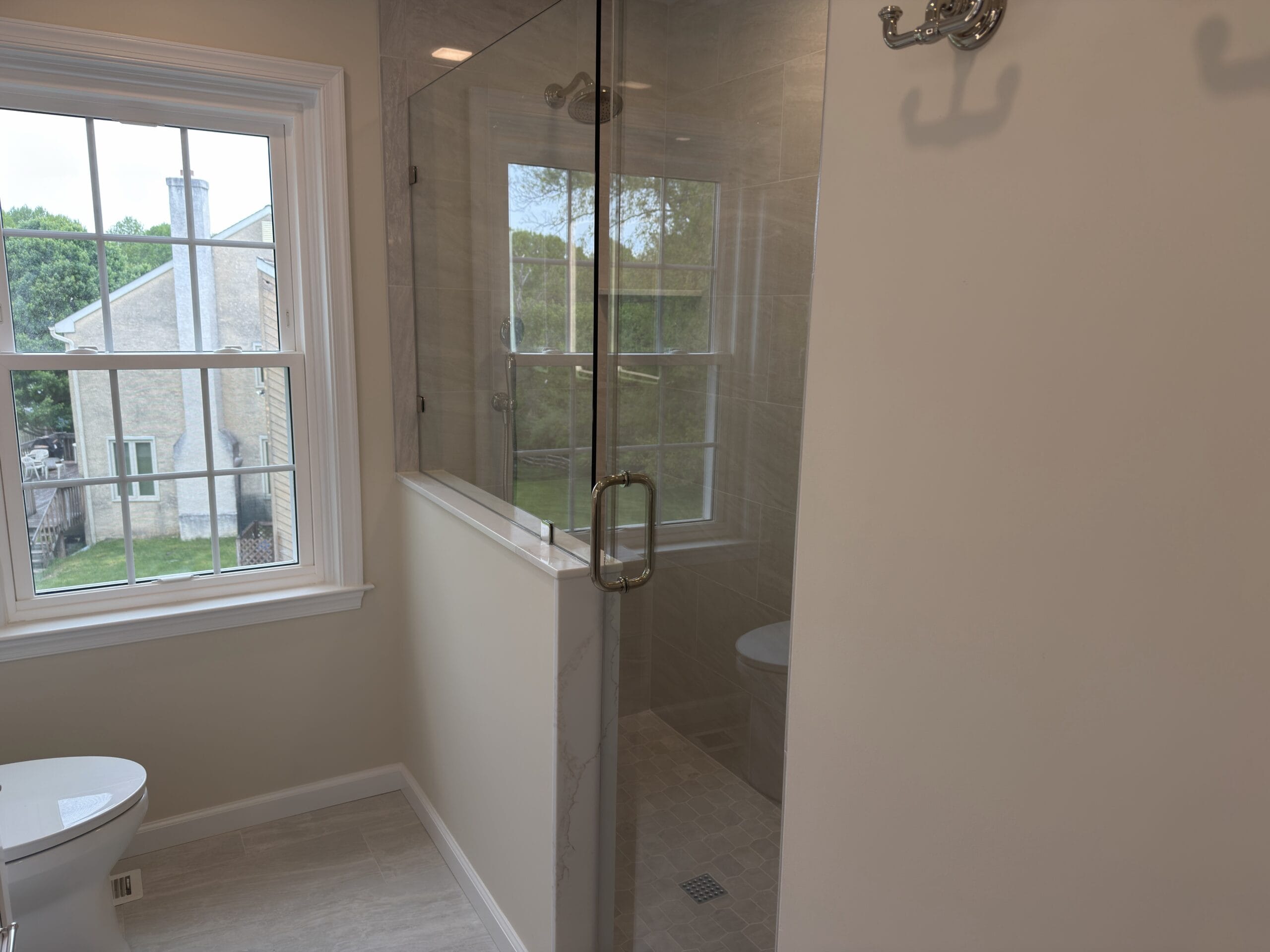
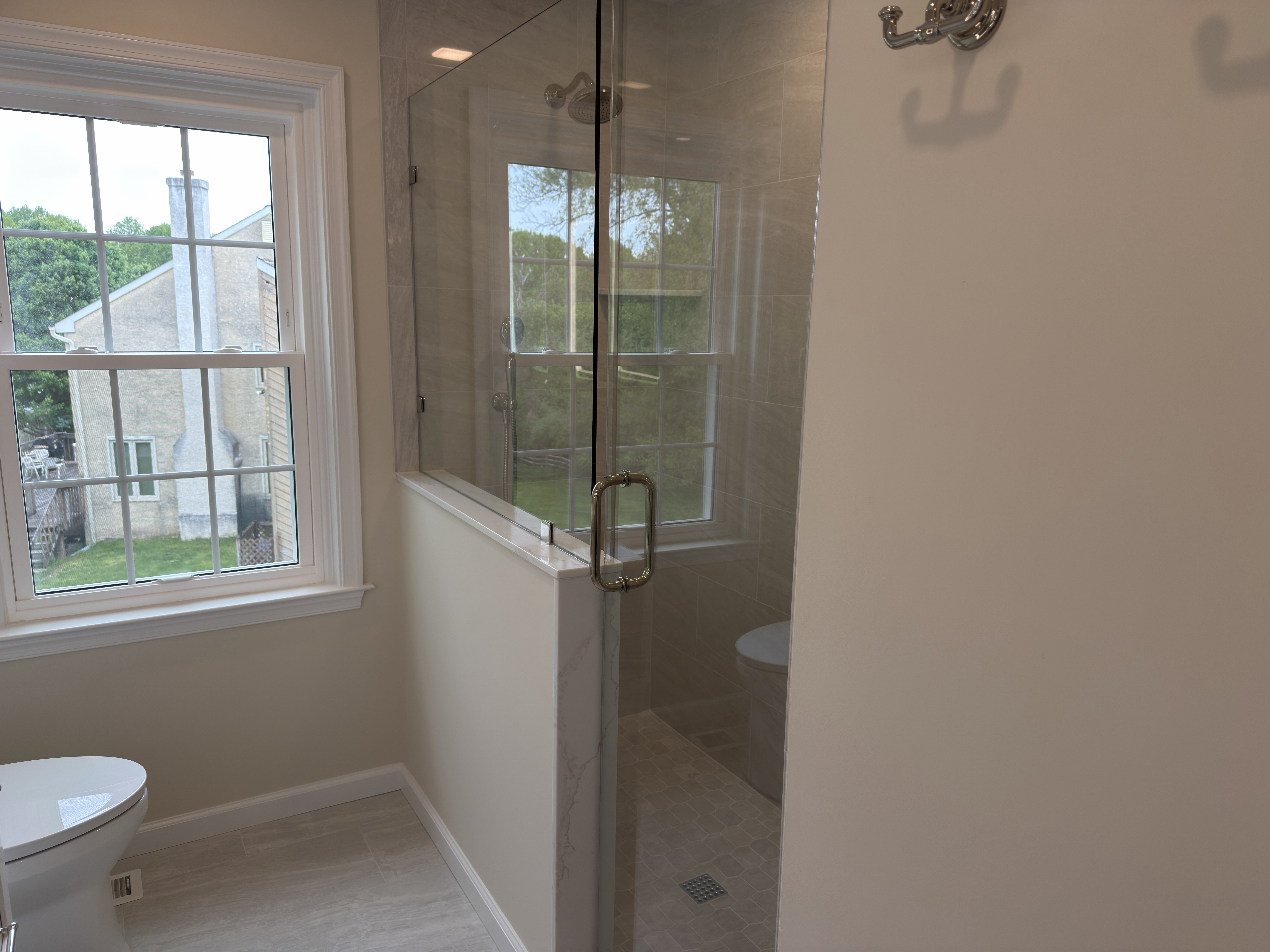
A walk-in shower conversion costs $8,000–$15,000+ inside a full bath remodel, $12,000–$25,000+ as a standalone project, and $20,000–$30,000+ for a premium curbless build. Add $3,000–$8,000 for the aging-in-place package (curbless entry, grab-bar blocking, comfort-height fixtures). These numbers are for a tile-and-glass shower built from the subfloor up — not an acrylic insert.
Key Takeaways
- Tub-to-shower conversion: $8K–$15K+ as a line item inside a full bath remodel and $12K–$25K+ standalone.
- Standalone costs more per square foot because a one-room job absorbs the full cost of mobilizing demo, plumbing, tile, and glass trades for a single product.
- An acrylic insert (Bath Fitter, Re-Bath) at $4K–$10K is a different product — not what we build.
- Tile and glass are the two biggest swing factors: the same footprint can be a $4K or $14K tile job; frameless glass runs 30–50% more than semi-frameless.
- Aging-in-place add-ons add $3K–$8K at any tier — dramatically cheaper installed during the remodel than retrofitted later.
- Older homes routinely hide galvanized supply lines, polybutylene pipe, rotted subfloor, and undersized joists under a tub.
The full bath remodel itself runs $35K–$65K — see our bathroom cost guide. Why standalone costs more per square foot: when we’re already on-site for a full bath gut, the marginal cost of the shower is just the shower work. A standalone absorbs the full cost of mobilizing every trade for one room. A real example: a standalone we estimated for a Bryn Mawr homeowner came in at $17,369 — the honest middle of the standalone range. Line-by-line below.
The Process
How a Conversion Is Built (Nine Steps)
- Demo. Tub, surrounding tile, drywall, sometimes subfloor. Cast-iron tubs get cut out in place with a grinder.
- Subfloor and framing inspection. Common finds: rotted subfloor at the tub apron corner, or joist sistering where an old cast-iron tub overloaded the framing.
- Drain relocation. Tub drains sit at one end; shower drains sit in the middle or at one wall. Almost always has to move.
- Plumbing rough-in. New mixing valve at standing height (we set the valve body at about 48 inches), shower-head supply, hand-held if specified.
- Pan or base construction. Pre-formed acrylic/fiberglass for curbed; hand-built mortar bed with Schluter KERDI for tile-set; recessed sloped subfloor with linear drain for curbless.
- Waterproofing. Where the shower lasts 30 years or fails in 7. We use Schluter KERDI membrane on walls, KERDI-Drain at the drain. Membrane materials alone run $800–$1,500.
- Tile. Wall tile, shower-floor tile (steeper slope), niches, bench if specified.
- Glass enclosure. Measured to finished tile, never the framing. 2–3 weeks measure to install.
- Fixtures and finish. Shower head, valve trim, hand-held, glass shelves, hooks, final caulking.
Cheap conversions cut steps 5 and 6 — exactly where failures come from. On a Malvern bathroom, we opened the floor and found joists drooping and undersized for the load. Strengthening the framing was a $2,500 change order — the kind of condition a fixed-price contract has to surface honestly, not bury.
Where the Money Goes ($13K Conversion)
| Component | Low | Mid | High | What Drives Price |
|---|---|---|---|---|
| Tile + waterproofing materials | $2,800 | $3,500 | $4,200 | Schluter KERDI + KERDI-Drain, mortar, grout; premium tile pushes the high end |
| Tile labor | $2,600 | $3,200 | $3,900 | Niches, benches, curbless slope add setter hours |
| Glass enclosure | $1,800 | $2,800 | $5,500+ | Frameless adds 30–50% over semi-frameless; custom sizing |
| Plumbing rough + finish | $1,500 | $2,200 | $3,500 | Drain relocation; straight swap is low end |
| Demo + subfloor prep | $1,000 | $1,400 | $2,000 | Cast-iron tubs add $300–$600 in labor alone |
| Fixtures (head, valve, trim) | $700 | $1,100 | $2,500 | Brand tier — Delta/Moen low, Kohler/Hansgrohe mid, Brizo high |
| Drywall, paint, misc finish | $500 | $700 | $1,000 | Patch around the new shower frame |
The Bryn Mawr line-item ($17,369 total): project management $542 · demo $1,589 · plumbing $1,844 · drywall $649 · paint $448 · tiled shower (set and waterproofed) $7,267 · frameless glass $3,881 · fixtures $1,151. Tile and glass were 64% of the job — the two biggest knobs on your number. Most clients spec plumbing fixtures at Weinstein Supply (West Chester or Kennett Square) or Ferguson (King of Prussia).
By Tier
What You Get at Each Tier
| Tier | Inside Full Remodel | Standalone | What You Get |
|---|---|---|---|
| Tier 1 — Basic | $8K–$12K | $12K–$16K | 32″×60″ or 36″×48″ footprint, pre-formed acrylic/fiberglass base with 5″–7″ curb, 12×24 large-format porcelain, semi-frameless or sliding glass, chrome Delta/Moen fixtures, single niche |
| Tier 2 — Mid | $12K–$18K | $16K–$22K | 36″×60″+, mortar-bed pan with KERDI, mid-grade porcelain with accent, frameless or semi-frameless glass, Kohler/Hansgrohe fixtures, niche + bench or niche + grab-bar blocking, optional heated floor (+$1,500–$2,500) |
| Tier 3 — Premium / Curbless | $18K–$30K+ | $18K–$30K+ | 42″×60″–48″×60″+, curbless zero-threshold entry with linear drain, premium tile, frameless custom glass, Brizo or Kohler rain + hand-held, multiple niches + bench + grab-bar blocking, heated floor in and out of the shower |
On a Malvern primary bath, we recessed the subfloor within the existing joist bay so the shower floor came up flush with the bathroom floor — a true curbless entry without major reframing. Done right, it reads as one continuous tiled plane.
Curbless + Aging-in-Place Add-Ons
A curbless shower — also called zero-threshold — is the highest-impact aging-in-place feature you can install, and it looks dramatically more modern than a curbed shower. The shower floor slopes to the drain inside the footprint while the entry stays flush with the bathroom floor. We recess the subfloor 1.5″–2″. If joists run perpendicular to that recess, we may have to sister joists or add blocking. A linear drain at one wall is standard. Budget $3,000–$8,000 at any tier for the full aging-in-place package — curbless entry, grab-bar blocking, comfort-height fixtures, wider doorway if framing allows, optional fold-down bench.
If you plan to be in the house in 15 years, build the curbless entry now — one of the few decisions where waiting actually costs you money. We recommend grab-bar blocking on every primary bath we touch, even at 45. The wood costs $40 and turns a future grab-bar install into a 20-minute job instead of a wall-opening project.
Behind the Wall
Hidden Costs in Older Homes
A conversion opens the floor, the wall plumbing, and often the joist bay all at once — behind-the-wall surprises are common.
| Hidden Condition | Where We See It | Typical Add |
|---|---|---|
| Galvanized steel supply lines (corroded, flow-restricting) | Pre-1970 homes; still in some 1980s additions | $1,500–$4,000 |
| Polybutylene (PB) pipe — gray plastic, 1978–1995, class-action failure history | Many 1980s–early-1990s Delaware County and Main Line homes | $1,500–$4,000 |
| Subfloor rot at the tub apron or toilet flange | Any age — water has migrated for years | $500–$2,000 |
| Joist deflection or undersized joists under a cast-iron tub | Older homes where a heavy tub masked weak framing | $800–$2,500 |
| Galvanized drain lines (interior diameter narrowed to a pencil) | Pre-mid-1980s homes | $800–$2,500 |
| Asbestos in vinyl flooring or joint compound | Pre-1985 homes | Testing $25–$50/sample; abatement $1,500–$5,000 |
On a Media remodel, the original sheet flooring tested positive for asbestos. We told the homeowner the same day — we don’t do abatement ourselves (not trained or insured for it), so we brought in licensed specialists. Four days added, not four weeks. When we find galvanized or polybutylene in an open wall, we replace the runs serving the shower right then. This is why we use fixed-price contracts and disclose that change orders almost always surface in the first one to three days of demo.
Why Tile Is the Biggest Cost Swing
The same shower footprint can be a $4,000 tile job or a $14,000 tile job depending entirely on what you pick. What drives labor up: tile size (small tile like mosaic/penny round/2×4 subway takes 3–4× the labor of 12×24 large-format); pattern (herringbone, chevron, basketweave each add setting time and waste); niches (single 2–4 hours; triple niche with stone shelf is half a day); trim and edges (Schluter metal profiles $4–$8/lin ft plus cutting labor, or bullnose tile alternative); curbless slope (30–50% more time — one-directional, has to be perfect against the entry plane). Tile material runs $3–$6/sq ft builder-grade porcelain, $6–$12 mid-grade (most of our projects), $12–$25 marble or premium porcelain, $18–$40 handmade zellige.
Glass: Why Frameless Costs More
| Glass Type | Typical Cost | Best For |
|---|---|---|
| Sliding (bypass) doors | $800–$1,800 | Tight budgets or small baths where a hinged door won’t swing |
| Semi-frameless hinged door + panel | $1,500–$2,800 | Most of the frameless look at a meaningful discount |
| Frameless single panel (walk-in, no door) | $1,800–$3,500 | Modern curbless showers with a wide enough footprint to keep water in |
| Frameless hinged door + panel(s) | $2,500–$5,500+ | Premium — 3/8″ or 1/2″ tempered glass, custom-fabricated |
Frameless costs more because of thicker glass, heavier hinges, more exact field measurement, longer install, and full custom fabrication. Lead time: 2–3 weeks from measure to install. The shower must be tiled and grouted before the glass can be measured — the single most common reason a standalone job’s last two weeks feel slow.
How Long It Takes
Construction runs 4–7 weeks inside a full bath remodel. As a standalone, active on-site work compresses to 2–3 weeks, but selections plus the glass measure-and-fab cycle add 4–6 weeks of elapsed time — total 6–9 weeks. The biggest single cause of delay is glass lead time on a standalone job. We schedule the glass measurement the day the tile is grouted to compress that gap.
Our Take
What We Tell Our Clients
When someone shows us a $5,000 ad for a “tub-to-shower conversion,” we say plainly: that’s an acrylic insert, not a tile-and-glass shower. We’d rather lose the job than pretend otherwise. And on any conversion in an older home, we expect to find something behind the wall — we stop, show you, and discuss options before any additional cost is incurred.
Next Step
Want a Real Number for Your Conversion?
To talk through your bathroom — what scope makes sense and what it would actually cost — book a free consultation. We’ll walk your space and give you a straight range and timeline.
Or call us directly: 610-431-7150 · PA HIC #PA202519
Questions
Walk-In Showers in Real Fedor Bathrooms
Three recent bathrooms where the shower was the centerpiece, across Chester County, Delaware County, and the Main Line:
- West Chester — $70,000. A marble tile floor and shower with custom cherry cabinetry, in an enlarged footprint.
- Wayne — $80,000. A zero-threshold, all-tile shower with an infinity drain, plus a freestanding tub.
- Malvern — $140,000. A Corian shower over heated tile floors, with custom cabinetry and a freestanding tub.
Walk-In Shower Conversions by Community
We convert tubs to walk-in and curbless showers throughout the Main Line, Chester County, and Delaware County. Here’s a sampling of the communities we serve — we work in many more nearby:
- Bryn Mawr — tub-to-shower and curbless conversions
- Phoenixville — walk-in shower conversions
- Downingtown — zero-threshold and aging-in-place showers
- Media — curbless shower conversions
Frequently Asked Questions
Is a walk-in shower cheaper than a tub?
At the conversion stage, no. A tub-to-shower conversion costs more than a like-for-like tub replacement ($3,000–$6,000) because of the added waterproofing, tile work, and glass enclosure. A walk-in conversion starts at $8,000 even bundled into a larger remodel.
What’s the difference between a walk-in shower and an acrylic insert?
An acrylic insert (Bath Fitter, Re-Bath) is a one-piece molded surround installed in 1–2 days for $4,000–$10,000. A walk-in shower conversion is a tile-and-glass shower built from the subfloor up — different product, different price, different lifespan.
Do I need a permit?
Yes. Plumbing changes (drain relocation always counts), waterproofing, and tile all require a permit across our region. Permit costs run $200–$1,500 depending on the township under the PA UCC. Fedor handles the application and schedules inspections.
What kind of glass enclosure should I get?
Frameless if you have the budget ($2,500–$5,500+ for hinged door + panel). Semi-frameless for most of that look at a discount ($1,500–$2,800). Sliding doors only if the budget is tight or the bathroom can’t swing a hinged door.
How long does the conversion take?
4–7 weeks of construction inside a full bath remodel, or 6–9 weeks total elapsed as a standalone — only 2–3 weeks of that is active on-site work; the rest is material lead times and the glass measure-fabricate-install cycle. Frameless glass cannot be templated until the tile is set and grouted.
Is it worth it for resale?
For most homes in our $450K–$800K+ market, yes — with one caveat. A home with two full baths should keep at least one tub, especially in family-oriented neighborhoods. If you’re converting your only tub, the math is more nuanced.
Should I do it standalone or wait and do the whole bathroom?
If the rest of the bathroom is dated, do it inside a full remodel — more cost-effective per square foot. If the vanity, floor, and fixtures are sound and only the tub bothers you, standalone is the right call. See our tub-to-shower vs. full remodel comparison.
Sources
- PA HIC Verification — Fedor: PA HIC #PA202519.
- PA UCC (IRC 2018) — plumbing rough-in and shower waterproofing/drainage. Permits issued by township/borough.
- Schluter Shower System — KERDI membrane and KERDI-Drain.
- Remodeling Magazine 2024 Cost vs. Value (Middle Atlantic) — regional ROI data.