
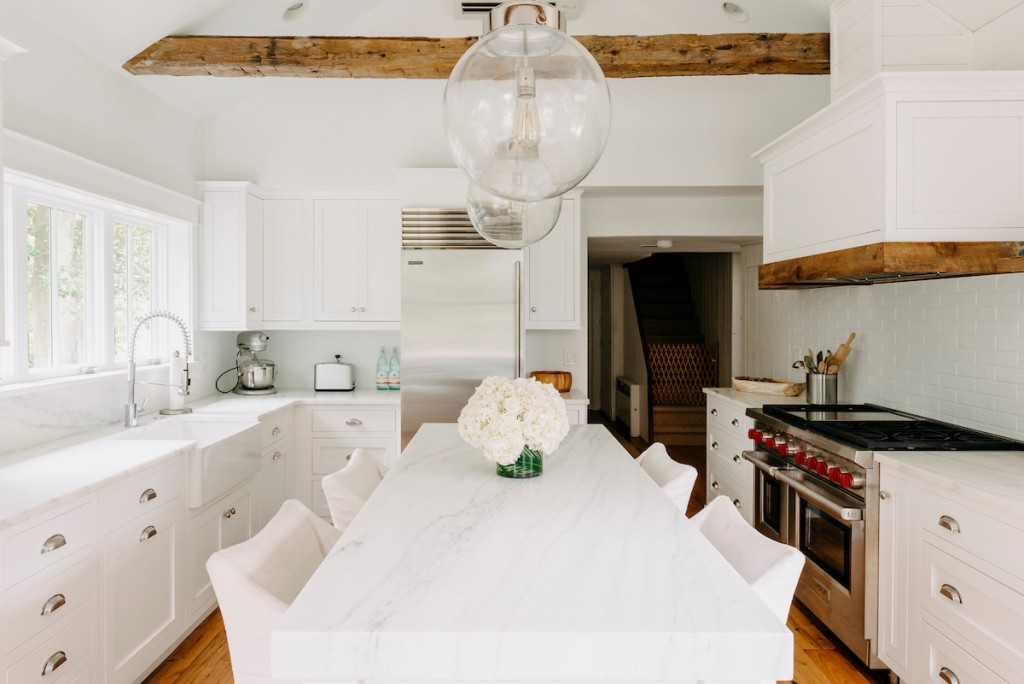
Kitchen Remodeling in Villanova, PA
Custom kitchens for Villanova’s stone colonials and traditional Main Line homes — designed and built by one team, on a fixed price, since 1989.



Last updated: May 2026 · Alex Smearman, Fedor Fabrication
Most kitchen remodels go wrong the same way
It’s almost always one of these three:
- The estimate that creeps the moment the walls come open.
- The crew that vanishes for two weeks at a stretch.
- The finger-pointing when the designer and the builder stop talking.
The fear of landing there is the real reason a lot of good kitchens stay dated for years — and it’s a reasonable one. It’s the thing we built this company to put to rest.
A Villanova stone colonial kitchen is a major, months-long, six-figure decision. Most of Villanova sits in Lower Merion Township, where the housing skews older and higher-finish than almost anywhere we work — stone colonials and traditional center-hall homes from 1900 through 1940, with butler’s pantry conversions, century-old electrical and plumbing to replace, and inset cabinetry with paneled appliances. In a 100-year-old house no one can promise exactly what’s behind the plaster until the work starts, so before you commit you want straight answers — what it really costs, how long it really takes, and what it’s like to live through. That’s what the rest of this page is for.
We’ve rebuilt Villanova kitchens since 1989 on fixed-price contracts, with one point of contact who answers your calls — so the number is real before you sign, and you’re never the one chasing us.
What a 1900s Villanova stone colonial kitchen actually involves
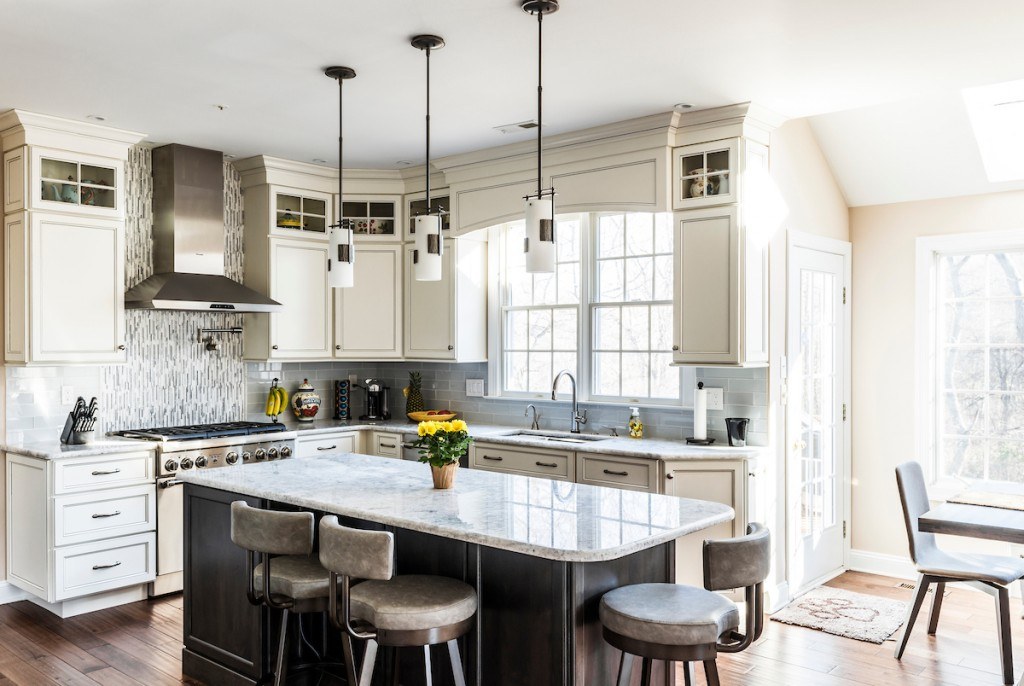
Most Villanova kitchen work falls into one of three jobs:
Pre-1930 stone colonials — the defining Villanova house, concentrated near the train station and along the Conestoga Road corridor. Typical scope:
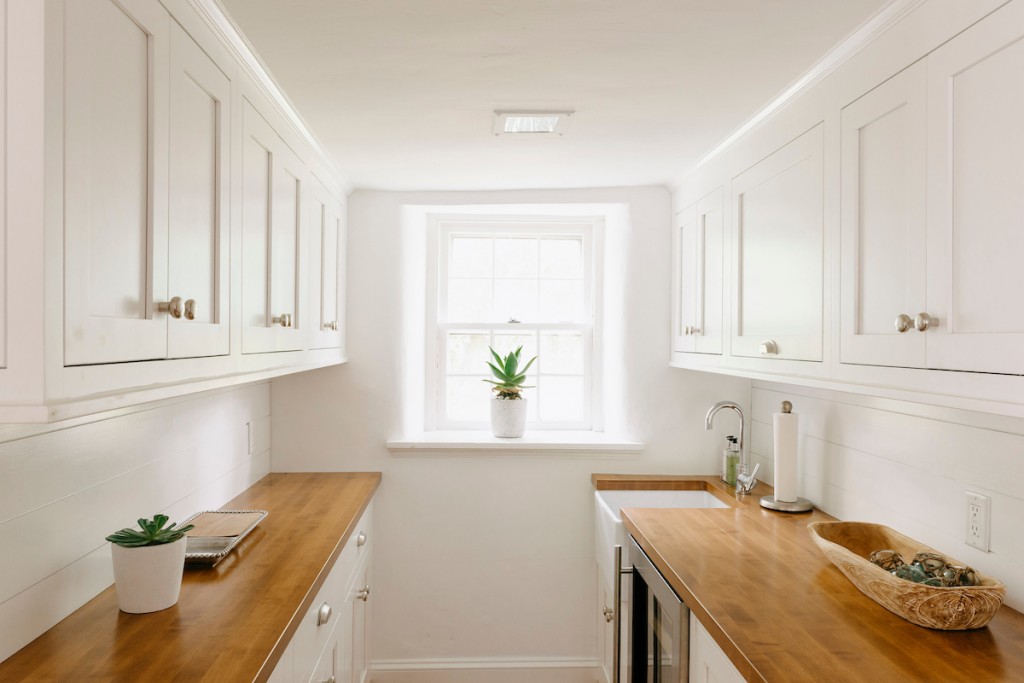
- Open the wall to the original butler’s pantry — almost universal here
- Replace original electrical service (often a 1970s 100-amp panel)
- Replace galvanized plumbing with copper
- Inset cabinetry in painted or stained finish, often with paneled appliances
- Relocate a hot-water radiator for cabinet placement
1920s–1960s center-hall homes — filling in between the larger stone colonials. More modest, similar finish:
- Open to the dining or breakfast room
- Cabinets to the ceiling at high finish levels
- Modern lighting and appliances
- Service upgrade if still on a 1960s panel
Mid-century moderns & post-2000 rebuilds — a smaller share, often refresh-tier scope.
One Villanova quirk: clients often work with an architect or interior designer from the start — we slot in cleanly as the build half of a design-build collaboration.
The same crew, start to finish
The people in your home are our own carpenters — not subcontracted labor that shows up one day and disappears the next. It’s why the work holds up, and why homeowners keep telling us our crews are the most respectful, communicative people they’ve had in their house.
Villanova kitchen costs — why Lower Merion Township projects skew higher
Bids for a project like this land all over the map — and the lowest one is usually the one that climbs the most once the walls come down. We’d rather hand you the honest range up front. Villanova stone colonial kitchens almost always run in Tiers 3 and 4; refresh-tier projects are rare.
| Tier | Range | Typical Villanova project |
|---|---|---|
| Cosmetic Refresh | $30,000 – $45,000 | Rare — only on post-2000 contemporary rebuilds |
| Pull-and-Replace | $50,000 – $90,000+ | Possible on smaller mid-century homes |
| Full Remodel | $90,000 – $150,000+ | Standard stone colonial scope including infrastructure |
| Custom Kitchen Build | $130,000 – $190,000+ | Down-to-studs on a larger Villanova stone colonial |
Two dials set the price: scope and finish — and they move independently. Scope is how much work and how big the project is — a cosmetic refresh keeps your layout and cabinet boxes and updates the surfaces; a pull-and-replace swaps everything within the same footprint; a full remodel moves walls and reworks the layout; a custom build takes the kitchen down to the studs. Finish is the separate dial: you can pull-and-replace with Sub-Zero, Wolf, and Great Northern cabinetry, or take a full custom build and stay budget-conscious with Tribeca cabinetry and GE Café appliances. The scope tier sets the size of the job; where you spend within it is yours to steer. We’ll install whatever you spec — the brands below are simply the lines we reach for most.
Villanova stone colonial kitchens typically land in the upper end of the published ranges because of the structural and infrastructure work plus higher finish-level expectations. The Custom Build tier doesn’t carry a hard ceiling — full custom projects with paneled appliances, inset cabinetry, structural work, and premium materials regularly exceed $190K. Appliances are not included in these ranges unless noted in your project scope.
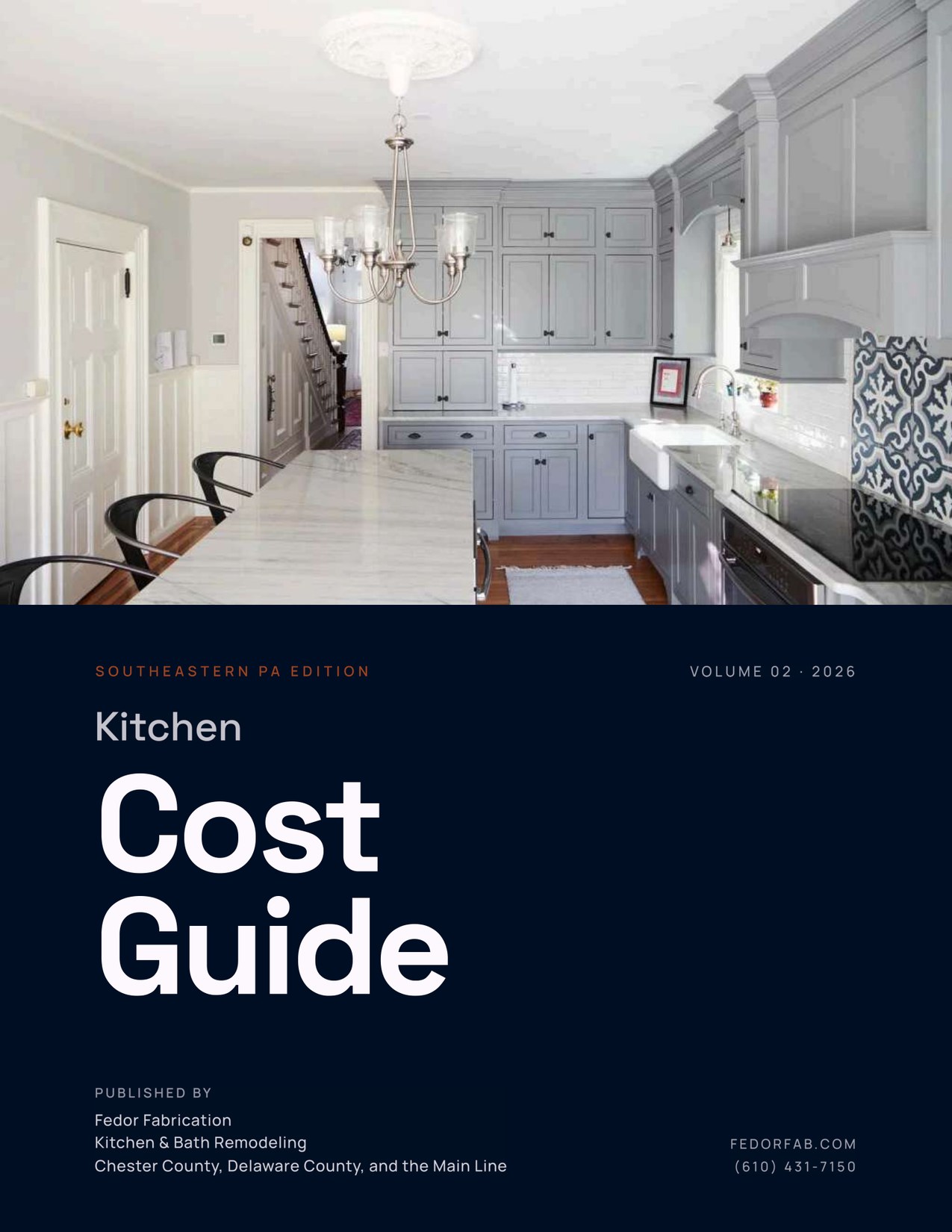
Free Download
Want the full line-item breakdown?
The 2026 Southeastern PA Kitchen Cost Guide breaks down every tier — from a $30K refresh to a $190K+ custom build — with line-item costs from completed Fedor projects across Chester County, Delaware County, and the Main Line.
Free PDF · No spam · Unsubscribe anytime
Selections
The cabinetry, counters, and appliances we install
We build from lines that hold up in a working kitchen — not whatever’s on promotion. Here’s what we typically spec, and we don’t take supplier kickbacks on any of it:
- Cabinetry: six lines, accessible to fully custom — Tribeca, Aspect, Century, Shiloh, Eclipse, and Great Northern (plywood boxes, dovetailed drawers, soft-close throughout)
- Countertops: Cambria, Caesarstone, Silestone, and Emerston quartz; granite and quartzite slabs from Imperial Marble & Granite
- Plumbing fixtures: Kohler, Delta, Brizo, Hansgrohe, and Rohl — specified through Ferguson and Weinstein Supply
- Appliances: from GE Café and KitchenAid up to Sub-Zero, Wolf, Thermador, Miele, Bosch, and Monogram — sourced at cost through Gerhard’s
Our Design-Build Process
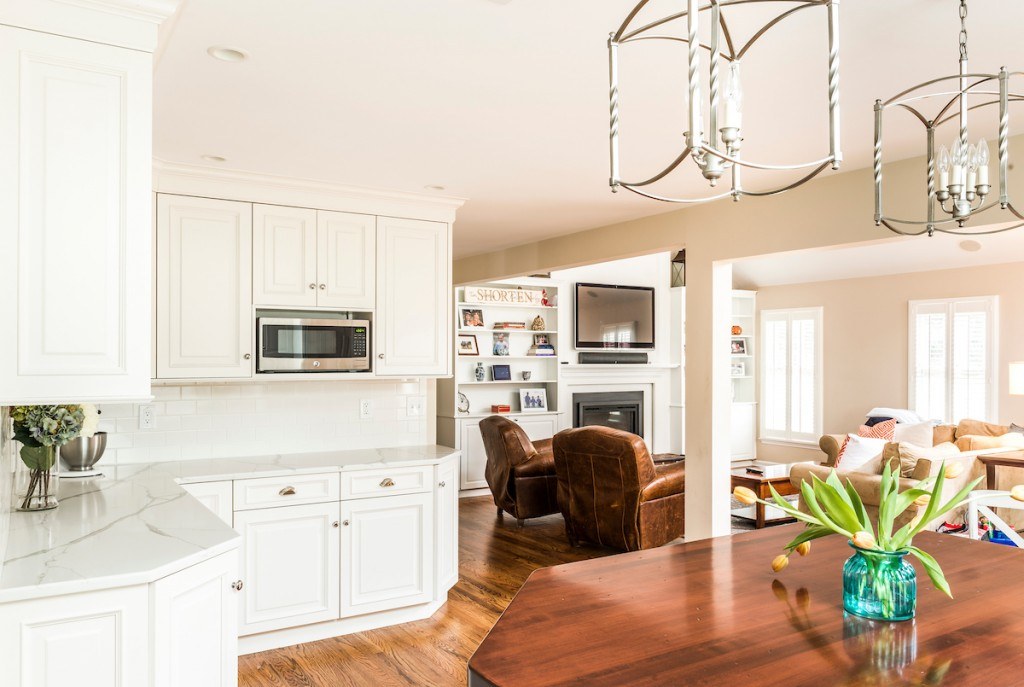
Most remodels go sideways for the same reason: design and construction don’t talk to each other. The designer draws something the builder can’t actually build for the price quoted, and you’re stuck in the middle.
We use a design-build model — the team that designs your Villanova kitchen is the team that builds it. By the time you get a contract, every line is priced, every spec is confirmed, and the old-house problems other remodelers hit mid-job (knob-and-tube, an undersized panel, galvanized supply) are already solved. We sequence the work around Lower Merion Township’s inspection schedule, and we collaborate cleanly with your architect or designer if you have one.
The 8 steps, start to finish
- First Call — 15 minutes with Alex, the owner, to hear what you’re planning.
- In-Home Consultation — we walk the space and listen.
- Design + Initial Estimate — a concept and a real budget range.
- Selections & Refinement — every finish chosen before we build.
- Fixed-Price Proposal — every line priced; the number is real before you sign.
- Pre-Construction — permits, ordering, scheduling, staging.
- Construction — carpenter-led crews, one point of contact, daily updates.
- Walkthrough + Warranty — closeout, backed by a 1-year workmanship warranty.
On schedule — and you’re never chasing us
“Nobody showed up for two weeks” doesn’t happen here. We block dedicated crew time and hold to it, with one point of contact who answers your calls and a live portal showing exactly where your project stands.
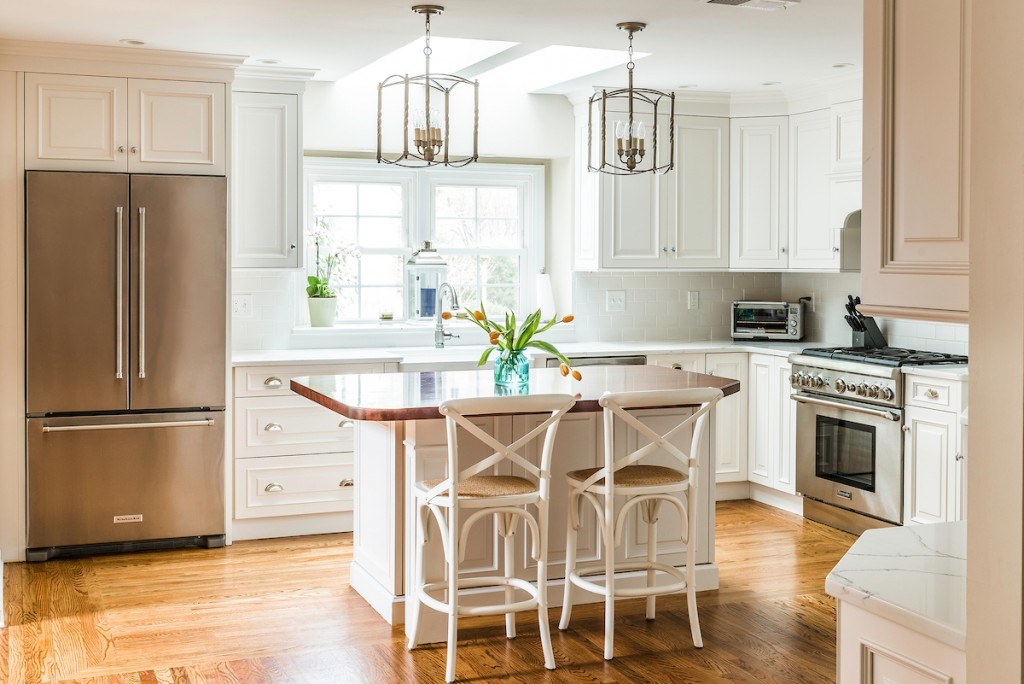
Ready when you are
That is exactly how your Villanova kitchen would run.
Fixed price, one point of contact, daily updates, a 1-year workmanship warranty. The first step is a free 15-minute call — real numbers for your house and an honest answer on whether we are the right fit.
Lower Merion Township permitting for Villanova kitchen projects
We handle all of it — every required permit, pulled through Lower Merion Township. Permit fees tend to run 1–2% of contract value and are included transparently on every Fedor proposal.
Where we source for high-finish Villanova kitchens
- Plumbing fixtures: Ferguson (King of Prussia)
- Tile and stone: Devon Tile or The Tile Shop (King of Prussia)
- Flooring: Avalon Flooring (King of Prussia)
- Appliances: Gerhard’s Appliances (Ardmore)
Recent Work
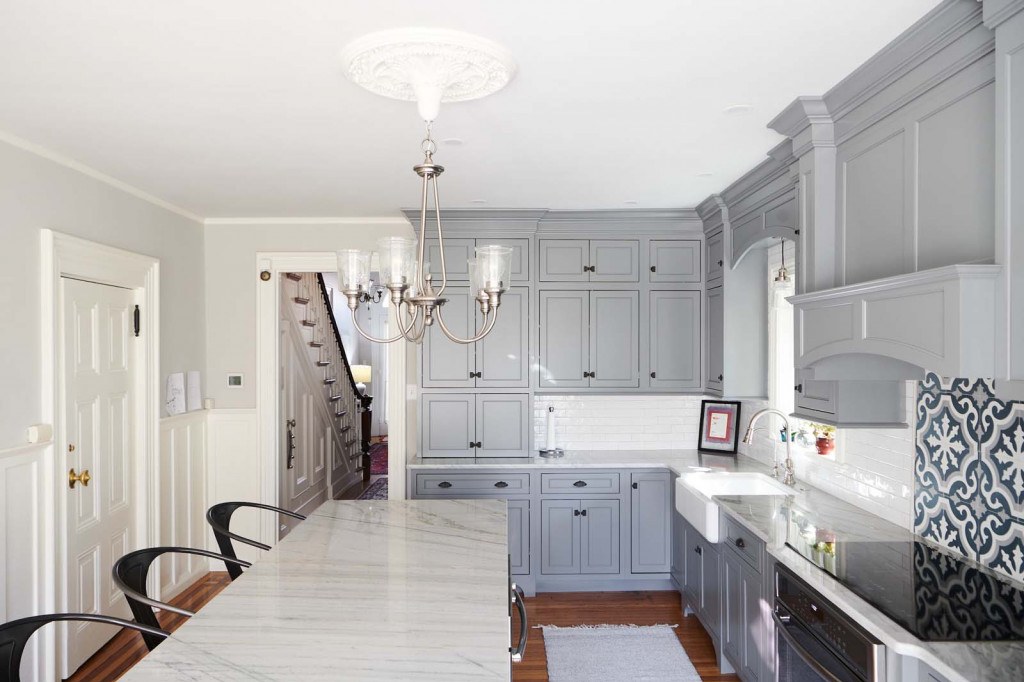
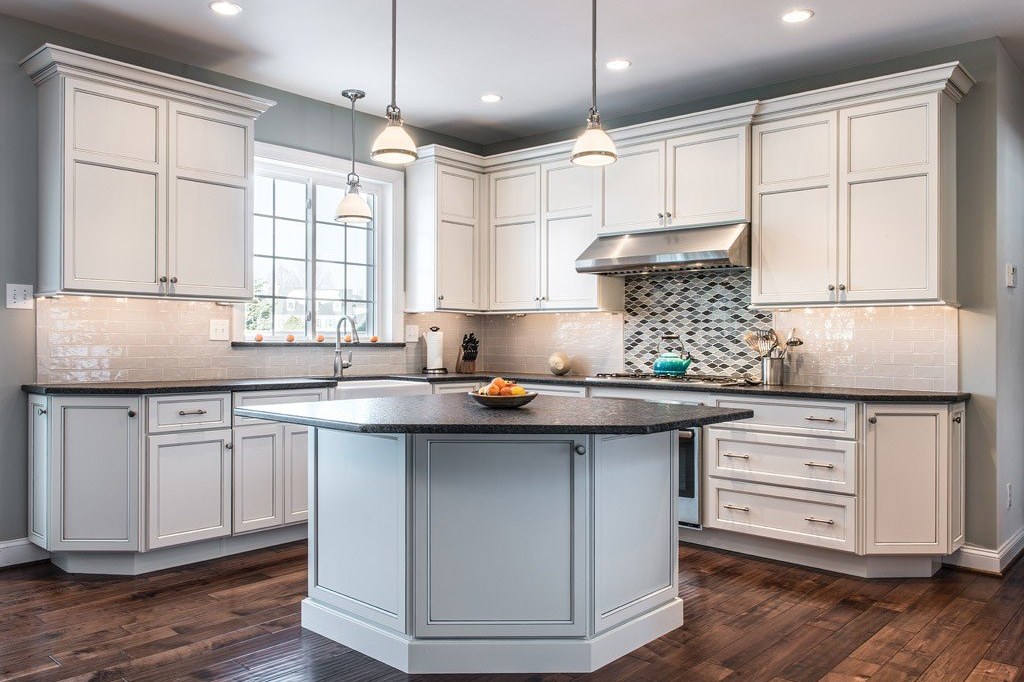
Recent Villanova Projects
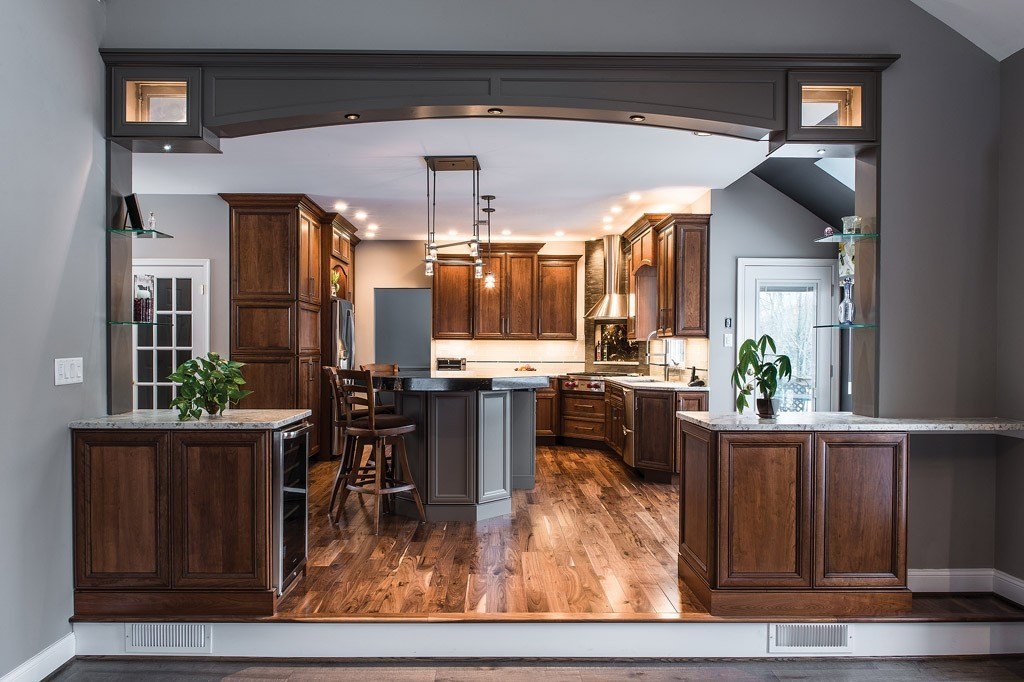
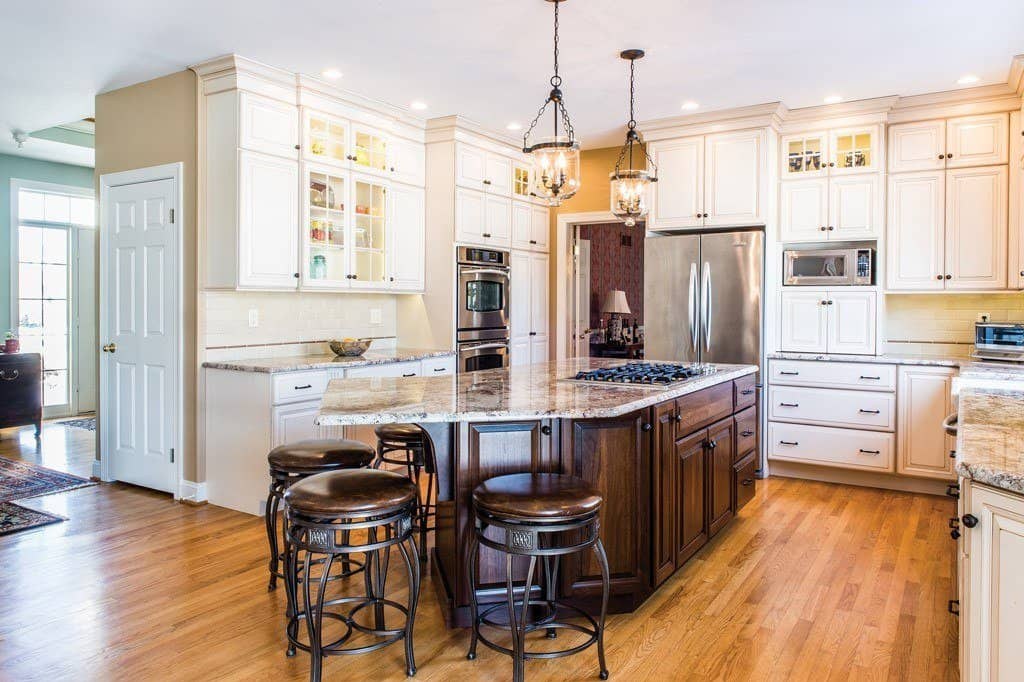
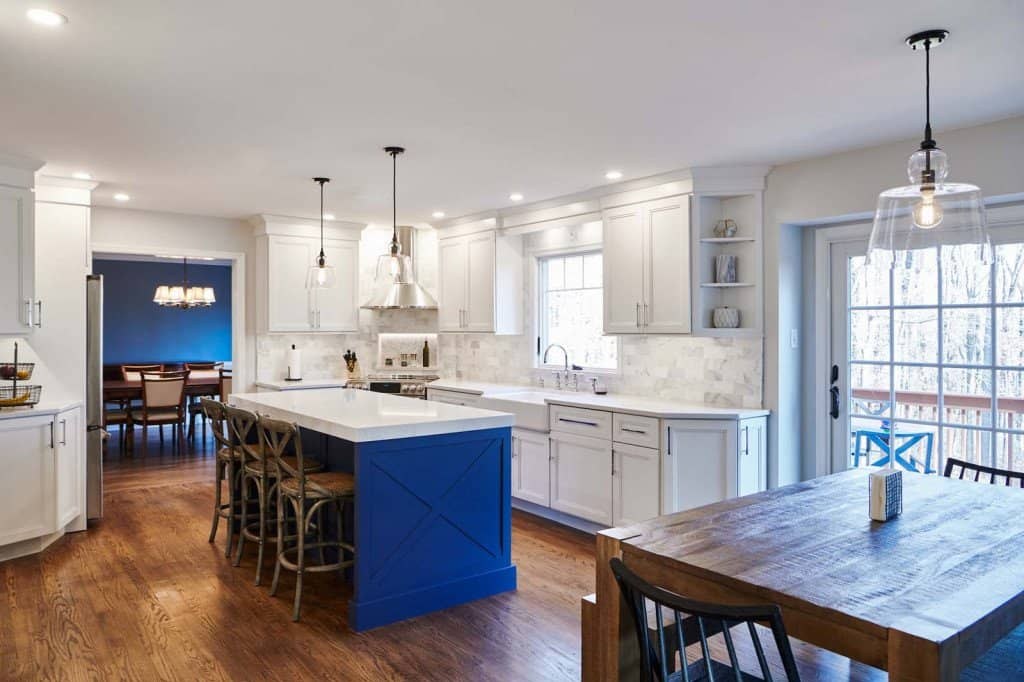
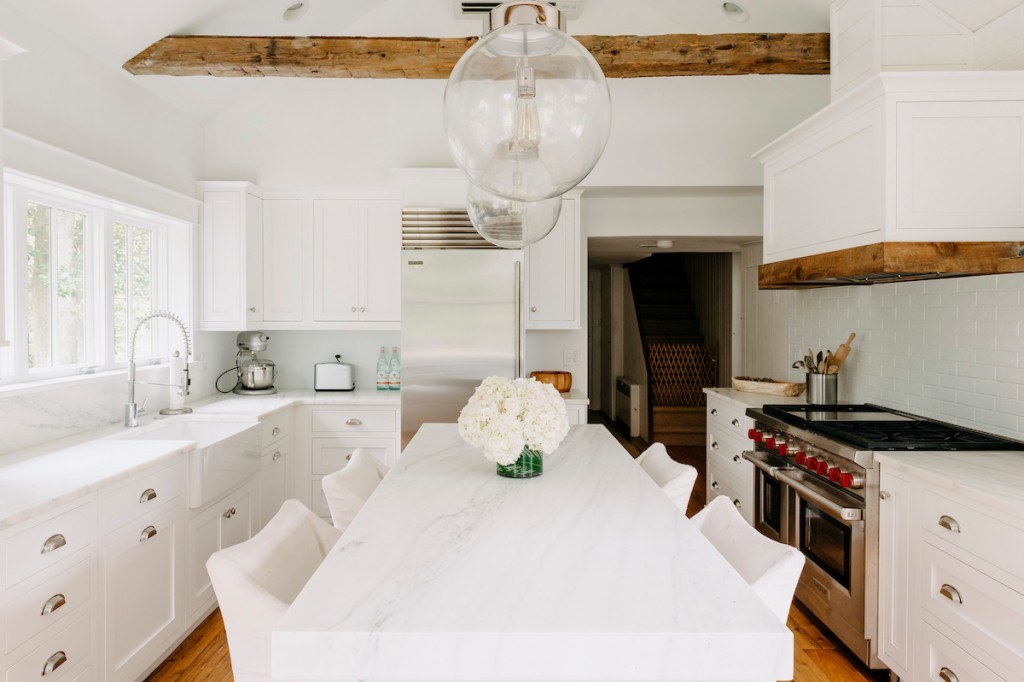
What Villanova Homeowners Say About Working With Us
★★★★★ 4.9 / 5
186+ verified reviews across Google and Angi
Reading reviews is the single best way to know what working with a contractor is actually like. We’d rather you read what our Main Line clients say in their own words than read marketing copy from us.
Everything from first meeting to final completion was a pleasure to work with the sales, craftsmen and ownership of Fedor. Everyone involved was committed to a quality design and installation of our new kitchen. We highly recommend Fedor Fabrication for kitchen and bath renovation. We are very pleased with our new kitchen.
Marianne M. — verified Google review
by far the best around ! kitchen and bathrooms in 2 homes that are outstanding …no need to interview other contractors !
Jack K. — verified Google review
Frequently Asked Questions
How much does a kitchen remodel cost in Villanova?
Villanova kitchen remodels run $50,000 to $190,000+, and most land in the upper tiers. A pull-and-replace on a smaller mid-century home runs $50K–$90K; a full stone colonial remodel including infrastructure work runs $90K–$150K+; a down-to-studs custom build on a larger Villanova colonial runs $130K–$190K+, and fully custom projects with paneled appliances and inset cabinetry go beyond that. Villanova skews high because pre-1930 stone colonials need electrical service replacement, replumbing, and structural work newer homes don’t. Appliances aren’t included unless noted in scope. The free cost guide above breaks every tier down.
How long does a Villanova stone colonial kitchen remodel take?
Most Villanova kitchen remodels run 6–10 weeks of active construction once cabinetry and materials are on site. The full timeline from first call to final walkthrough is typically 4–6 months, because a pre-1930 stone colonial adds steps a newer home doesn’t — opening to the butler’s pantry, electrical service replacement, replumbing, and Lower Merion Township inspections between phases. We give you a hard date at proposal and update it weekly in the JobTread portal so you always know where the project stands.
What’s included in your fixed-price quote?
Everything we can see at signing: design, all materials (cabinetry, countertops, tile, fixtures, hardware), all labor and trade partners (electrical through our electrician, plumbing through our plumber, tile, finish carpentry), permits, inspections, dumpster, project management, and the final walkthrough. The known old-house work — panel replacement, galvanized-to-copper replumb, structural work to open a wall — is priced in, not left as an allowance that balloons later. Appliances are included only if noted in your scope. The only thing that changes the number is scope you add after signing, documented and approved by you in writing first.
What happens when you open a wall in a 1900s Villanova home?
In a pre-1930 Villanova stone colonial we almost always find something behind the plaster — knob-and-tube wiring, an undersized 1970s panel, galvanized supply lines, or framing that isn’t where the drawings assume. None of it surprises us; it’s why these projects take real expertise to run. We price what we can see directly on the proposal and flag what we can’t. If hidden conditions surface at demo, we document, photograph, price, and get your written approval before proceeding. No silent change orders.
Can I keep my existing kitchen layout?
Sometimes — but on a Villanova stone colonial it’s usually worth opening the wall to the original butler’s pantry or the dining room, which is the single most common change we make here. If the existing layout genuinely works and you just want new cabinetry, counters, and finishes, that’s a pull-and-replace — faster and less expensive. We give you an honest read on your specific kitchen; keeping a bad layout to save money is the change homeowners regret most within a year.
What if I want to remove a wall or add an island?
Common on Villanova projects. Many stone colonial kitchens were built closed-off, and opening to the butler’s pantry or dining room transforms how the house lives. If the wall is load-bearing — frequently the case in these homes — we bring in a Pennsylvania-registered structural engineer for a stamped beam design, scoped and priced on the proposal, not improvised mid-project. A marble or stone island is one of the most-requested Villanova features; we account for the cabinet, electrical, and any plumbing runs it needs from the start.
What cabinetry and materials do you typically install in Villanova kitchens?
Villanova clients lean toward inset cabinetry in painted or stained finish, often with paneled appliances to keep the period look. We spec cabinetry through Shiloh and Great Northern, tile and stone through Devon Tile or The Tile Shop in King of Prussia, plumbing fixtures through Ferguson, and appliances through Gerhard’s in Ardmore. We don’t take supplier kickbacks — the recommendation is based on what holds up in a working kitchen, not on our margin.
Do you work with my architect or interior designer?
Yes — it’s common on Villanova projects, more so than anywhere else we work. Many Villanova homeowners engage an architect or interior designer from the start, and we function as the build half of a design-build collaboration. If you already have drawings, we review them, tell you what works and what won’t build for the price assumed, then build to spec. If you don’t, our in-house design-build covers it end to end.
My Villanova home has knob-and-tube wiring. Can you replace it?
Yes. The visible work — panel replacement, the wiring runs we can identify on the walk, the new circuits the kitchen needs — gets scoped and priced directly on the proposal. For hidden knob-and-tube buried inside walls or attic chases we can’t see until demolition, the proposal notes that hidden infrastructure may surface; if it does, we walk you through scope and cost before any change order. Many pre-1930 Villanova stone colonials still run on a 1970s 100-amp panel that has to come out for a modern kitchen anyway.
What does Lower Merion Township permitting cost for a Villanova kitchen project?
Permit fees through Lower Merion Township typically run 1–2% of contract value. On a $130,000 stone colonial kitchen, expect roughly $1,300–$2,600. We pull every required permit, schedule the inspections around the production schedule, and show the permit cost as a transparent line item on the proposal — it’s never buried in markup or sprung on you mid-project.
Do I need to hire my own designer?
No separate designer needed — we’re design-build, so the team that designs your Villanova kitchen is the team that builds it; nothing gets drawn that we can’t build for the price quoted (and we collaborate cleanly if you already have an architect).
How will you communicate with me during construction?
During construction you get one point of contact who answers calls and texts, daily progress updates, and a heads-up before anything becomes a problem, plus the live JobTread portal showing schedule, budget, and invoices. On a 100-year-old house, that communication is the difference between a manageable project and a stressful one.
Can I see Villanova kitchen projects you’ve completed?
Yes — see our Marble Island Kitchen Remodel and the full project portfolio.
Do you also remodel bathrooms in Villanova?
Yes — Villanova bathroom remodeling — same fixed-price model, same Lower Merion Township permitting, same in-house crews. See everything we do in Villanova.
Sources & References
- Lower Merion Township
- Ferguson Bath, Kitchen & Lighting Gallery
- Devon Tile
- The Tile Shop
- Avalon Flooring
- Gerhard’s Appliances
- Pennsylvania Attorney General HIC Verification
- National Kitchen & Bath Association
Kitchen remodeling nearby: Wayne, Bryn Mawr, Ardmore, Newtown Square. Or see all Villanova remodeling services.
Schedule a Free Consultation
Ready to Start Planning Your Villanova Kitchen Remodel?
Remodeling a kitchen is a big, personal decision — you should feel good about who you hand it to. The easiest first step is a free 15-minute call with Alex, the owner, to get real numbers for your Villanova kitchen and an honest read on whether we’re a fit.
Or call us: 610-431-7150 · PA HIC #PA202519