
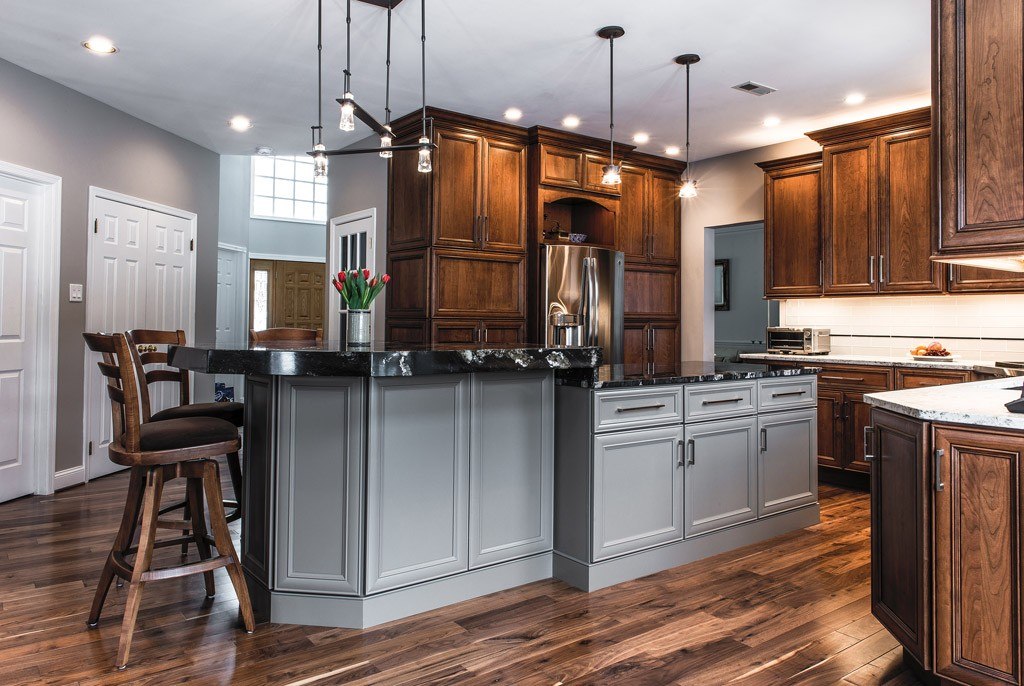
Kitchen Refresh vs. Full Remodel in Southeastern PA: How to Know What You Actually Need (2026)

How to tell whether your kitchen needs a cosmetic refresh, a pull-and-replace, or a full remodel — with honest 2026 cost ranges.

Not ready for a call? Send us a quick question

Key Takeaways

  • A kitchen project in Chester County, Delaware County, and the Main Line falls into one of four tiers: Cosmetic Refresh $30,000–$45,000 (boxes stay, surfaces change), Pull-and-Replace $40,000–$75,000+ (everything new, layout stays), Full Remodel $65,000–$120,000+ (layout changes, walls move, plumbing/electrical relocate), Custom Kitchen Build $100,000–$150,000+ (down to the studs).
  • Choose by what you can NOT live with, not by what you want. Sound cabinet boxes plus a working layout means a refresh is on the table; failed boxes or a broken layout means it is not.
  • Pull-and-Replace is the single most common Fedor project across our service area — the typical local kitchen is a 1990s–2000s colonial with failed builder-grade cabinets and a layout that works once you stop fighting it.
  • The “I want a refresh but really need a remodel” trap is the most expensive scope mistake we see. Refacing failed particleboard boxes buys roughly five years before the doors won’t close right.
  • Resale recoup drops sharply by tier — a minor refresh recoups roughly 96% per Zonda’s 2025 Cost vs. Value Report, a major upscale remodel closer to 40%. Selling within five years usually favors the smaller tier.

Three tiers, three different projects:

  • Kitchen refresh — $30,000–$45,000. Keeps the existing cabinet boxes. New doors and drawer fronts, countertops, backsplash, hardware, paint or stain, fixtures. No layout change.
  • Pull-and-replace — $40,000–$75,000+. Everything new on the existing footprint. The most common Fedor project in Southeastern PA.
  • Full remodel — $65,000–$120,000+. Moves walls, relocates plumbing and electrical, replaces everything.

This is for the homeowner who has been on Houzz and Pinterest for months, flipping between “we just need to update it” and “if we’re doing it, we should do it right.” Houzz’s 2024 study found the average kitchen planning phase runs 9.6 months — if you feel stuck, you are normal.

The hard part isn’t the inspiration. It’s matching your actual kitchen, your actual budget, and how long you’re staying to the right tier before you spend a dollar.


What’s the Difference Between a Kitchen Refresh and a Full Remodel?

A cosmetic refresh (keeping the existing cabinet boxes — the structural carcass bolted to the wall — and changing only the surfaces attached to them) costs $30,000–$45,000 in Chester County, Delaware County, and the Main Line. A full remodel ($65,000–$120,000+) replaces everything, changes the layout, removes walls, and relocates plumbing and electrical. The piece most online guides skip is the tier that sits between them: pull-and-replace ($40,000–$75,000+) — all-new cabinetry, counters, and finishes on the existing footprint.

The difference that matters is not the price. It’s what the project touches. A refresh never touches the layout or the mechanicals. A full remodel touches both. That single distinction is what separates a 2–3 week project from a 5–6+ week one, and a permit-optional job from a permit-required one.

TierRangeScope in One LineRight For
1. Cosmetic Refresh$30,000–$45,000Cabinet boxes stay; new doors/drawers, counters, backsplash, hardware, paint, fixtures.Sound cabinets, a layout that works, dated surfaces.
2. Pull-and-Replace$40,000–$75,000+Everything new, layout stays. New cabinets, counters, appliances, lighting; floors may stay.Cabinets are shot or builder-grade. Layout works. The most common Fedor kitchen project.
3. Full Remodel$65,000–$120,000+Layout changes, wall removal, island additions, plumbing/electrical relocation. New everything. Semi-custom or custom cabinetry (Shiloh, Great Northern).The layout is the problem. You’re moving walls or opening to the great room.
4. Custom Kitchen Build$100,000–$150,000+Down to the studs. Full reconfiguration, new mechanicals, structural work, often absorbs the pantry, mudroom, or dining room.A 25+ year-old home with original everything. You want a new kitchen, not an updated one.

The rule of thumb we use at the kitchen table: decide by what you can NOT live with, not by what you want. Refresh-tier homeowners who chase Houzz photos end up at full-remodel pricing with regret. Full-remodel homeowners who try to “save money” with a pull-and-replace end up tearing it back out in five years. On a recent Malvern consultation, the homeowner had a $40,000 number and a board full of open-concept great-room photos — those two things lived in different tiers, and the honest part of the conversation was naming that out loud before the proposal, not after demo.


How Do You Decide — The 6-Question Decision Tree?

You can answer these six questions in five minutes standing at your own counter. Each one maps to a tier. The point isn’t to box your project in — it’s to make sure you budget and plan for the floor of the right tier, not the ceiling of the wrong one.

Are the cabinet boxes sound, or are they shot?

Open a base cabinet and look at the box construction: plywood, or particleboard? Press on the floor of the sink base — solid, or spongy from years of slow leaks? Open and close every drawer. Are the glides smooth, or wobbly with screws pulled out of soft wood? “Sound” means a plywood carcass with tight joints and drawers that track; “shot” means swollen particleboard that will never go back to flat.

In our experience across Chester County, Delaware County, and the Main Line, most kitchens built before 2005 have particleboard boxes that absorbed moisture under the sink, around the dishwasher, and behind the trash pull-out. Cabinet refacing (new doors and drawer fronts plus a veneer skin over the existing box) only works if the box underneath is sound — cabinet replacement is the only honest answer when it isn’t. Refacing a dying box is the most expensive way to delay the inevitable.

Your AnswerPoints To
Plywood boxes, solid construction, drawers track smoothlyTier 1 (Refresh) is on the table
Particleboard, swelling under the sink, drawers wobblyTier 2 (Pull-and-Replace) minimum

Is the layout fundamentally broken, or just dated?

A broken layout is one you’d change even if money were no object — a peninsula that blocks the path to the family room, a sink with no counter on either side, a path that makes you walk around the island three times to load the dishwasher. A dated layout works fine; you just don’t like how it looks. Oak cabinets, laminate counters, fluorescent box lights — the bones are good.

What we see locally: 1990s–2000s colonial kitchens in Downingtown and Exton were laid out by production builders optimizing square footage, not flow, and the layout often works once you stop fighting it. The 1940s Main Line stone homes in Wayne and Bryn Mawr are the opposite — original kitchens were tight service spaces and the layout almost always has to change.

Your AnswerPoints To
Layout works, surfaces are datedTier 1 or Tier 2
1–2 specific pain points (narrow opening, small island)Tier 2 with minor moves, or Tier 3
Fundamentally wrong (closed off, dead corners, no flow)Tier 3 minimum

Are the appliances mid-life or done?

A full appliance suite runs roughly $3,000–$15,000+ (see our kitchen remodel cost guide for the Philadelphia suburbs). If yours are 0–7 years old and working, keeping them removes a real line item — and sometimes that’s the difference between landing in Tier 1 instead of Tier 2.

Your AnswerPoints To
0–7 years old, all workingRefresh or Pull-and-Replace; keep them
10+ years old, one or two failingReplace with the project
15+ years old, dated finishesFull replacement; budget $5,000–$15,000+

Is the plumbing and electrical original to the house?

This is the question that turns a refresh into a remodel without warning. If the home is pre-2000 and the supply line under the kitchen sink is the original polybutylene (gray plastic pipe, recalled-class material) or galvanized steel, there’s a clock running on a leak that will destroy whatever cabinets you just installed. If the panel doesn’t have dedicated circuits for dishwasher, disposal, microwave, and refrigerator, it isn’t to current code, and any inspector pulling a permit under the PA Uniform Construction Code (UCC) will flag it.

In our experience, 1990s-built Downingtown and Exton homes often have original 100A panels that need upgrading to 200A for a modern kitchen — that’s $1,500–$4,000 we add to the scope when it’s needed. Newer homes (2005+) usually pass.

Your AnswerPoints To
Plumbing and electrical updated within 15 yearsRefresh is realistic
Original to the home, home is pre-2005Tier 2 minimum, often Tier 3
Galvanized plumbing or an undersized panelTier 3 or Tier 4; budget the upgrades

Are walls coming down?

The moment you say “open it up to the family room” out loud, you’re in Tier 3. Removing a load-bearing wall (a wall carrying structural weight from above, as opposed to a non-bearing partition) means a structural engineer — we work with Rise Engineering — a properly sized steel or engineered-wood beam, temporary support during construction, and often header modifications. Budget $3,000–$10,000+ on top of everything else, depending on the span. You cannot do this in a refresh.

Your AnswerPoints To
No walls coming down, plumbing staysTier 1 or Tier 2
One wall opening or partial removalTier 3
Multiple walls, structural changes, absorbing other roomsTier 4

Are you staying or selling?

Most homeowners avoid asking themselves this one. Selling within five years means ROI matters and a refresh or modest pull-and-replace usually returns more per dollar. Staying 15+ years flips the math — you’re “paying” for the kitchen out of daily enjoyment, not resale, and the cost-per-year gap between a Tier 3 and a Tier 2 is small.

Your AnswerPoints To
Selling in 0–5 yearsTier 1 or Tier 2 (better ROI)
Staying 5–15 yearsTier 2 or Tier 3 (balance enjoyment + value)
Staying 15+ years or “forever home”Tier 3 or Tier 4 (do it once, do it right)

“The right tier for a kitchen remodel isn’t the most expensive one. It’s the one that matches your cabinets, your layout, and how long you’re going to live there. We’ve talked just as many homeowners INTO the smaller project as we have OUT of one.” — Alex Smearman, Owner, Fedor Fabrication (PA HIC #PA202519)


What Do You Actually Get in a Cosmetic Refresh ($30,000–$45,000)?

A cosmetic refresh keeps the cabinet boxes and changes everything attached to them: new doors and drawer fronts, new countertops (typically quartz), new backsplash tile, new hardware, paint or stain on paint-grade boxes, new sink and faucet, and new lighting. No plumbing or electrical relocation. Existing flooring stays, since the cabinet footprint doesn’t move.

It’s right for you if the cabinets are sound, the layout works for how you actually cook, the appliances are mid-life or newer, the home is post-2000 with mechanicals to code, and you’re either selling within five years or you genuinely like the room. Expect 2–3 weeks of construction and a shorter selections phase — there’s no cabinet line to spec, so there are far fewer decisions.

The honest tradeoff: if the boxes aren’t actually sound, refacing them is the most expensive way to delay the inevitable. We’ve torn out cabinets that were refaced for a previous owner roughly eight years earlier — the particleboard boxes were already failing when those doors went on, and new doors on a dying box just hides the clock. The Exton refresh from our kitchen cost guide came in at $33,000: new doors and drawers, refinished base cabinets, a removed soffit, new wall cabinets, under-cabinet lighting, backsplash repair, and shaker wainscoting on the peninsula. That homeowner got exactly what their kitchen needed, at the lowest tier.


When Is Pull-and-Replace the Right Call ($40,000–$75,000+)?

Pull-and-replace removes all existing cabinetry, countertops, backsplash, and fixtures and installs all new cabinets in the same footprint, plus new counters, backsplash, hardware, fixtures, and lighting. Minor electrical updates happen within the existing layout (under-cabinet lighting, GFCI updates, dedicated circuits). Plumbing supply and drain stay roughly where they were. Floors may or may not be replaced — a real advantage of this tier is that because the footprint doesn’t change, existing hardwood or tile can usually stay.

It’s the right call when the cabinets are shot but the layout works, you want a new kitchen without moving walls, and your budget supports real cabinetry instead of stock big-box. It is the most common project we do across Chester County, Delaware County, and the Main Line, and it isn’t close — the typical kitchen we walk into is a 1990s–2000s colonial with failed builder-grade cabinets and a layout that, once you stop fighting it, works fine. We do more pull-and-replace projects than every other tier combined.

Expect 3–4 weeks of construction and a longer selections phase than a refresh — cabinets, counters, backsplash, lighting, fixtures, hardware. For plumbing fixtures we typically work with Weinstein Supply in West Chester or Ferguson in King of Prussia; for appliances, Gerhard’s Appliances in Malvern coordinates delivery to the construction schedule. The honest tradeoff: if the layout is actually the problem and you choose pull-and-replace because it’s cheaper, you’ll be sitting in your “new kitchen” in five years wishing you’d done the layout change. We’d rather lose the project than sell the wrong tier.


When Do You Need a Full Remodel ($65,000–$120,000+) or a Custom Build ($100,000–$150,000+)?

A full remodel is the right tier when the layout itself is the problem — a galley closed off from the family room, an awkward peninsula, dead corners, no island, no flow. It includes layout changes, wall removal, island additions or relocations, plumbing and electrical relocation, often a panel upgrade, and new everything, including semi-custom or custom cabinetry from Shiloh or Great Northern. Expect 5–6+ weeks of construction plus 4–8 weeks of design, selections, and permitting, with framing, rough-in, and final inspections.

A custom kitchen build is down to the studs: full reconfiguration, new mechanicals, structural modifications, often absorbing the pantry, mudroom, or dining room, with premium materials throughout. It’s right for a 25+ year-old home where everything is original and you’re committed long-term. Expect 8–12+ weeks of construction plus 2–4+ months of pre-construction — custom cabinetry alone carries a 16–20-week lead time.

TierRangeConstruction TimeResale Recoup (per Zonda 2025)Best For
1. Cosmetic Refresh$30,000–$45,0002–3 weeks~96% (minor remodel)Selling in 0–5 years; cabinets sound
2. Pull-and-Replace$40,000–$75,000+3–4 weeks~50–70%Staying 5–15 years; layout works
3. Full Remodel$65,000–$120,000+5–6+ weeks~50% (major midrange)Staying 10+ years; layout is the problem
4. Custom Kitchen Build$100,000–$150,000+8–12+ weeks~40% (major upscale)Forever home; scope demands it

Recoup figures come from Zonda’s 2025 Cost vs. Value Report. The honest tradeoff at the bottom of the full-remodel range: $65,000–$80,000 full remodels often feel “tight” because layout changes eat budget that never shows up in the finished kitchen — beam work, plumbing reroutes, and electrical relocation are invisible once the drywall is up. Tier 4 is rarely about money; it’s about scope and timeline — if you need the kitchen done in 8 weeks, a custom build is not on the table no matter the budget.


Why Is the “I Want a Refresh but Really Need a Remodel” Trap So Expensive?

This is the most common scope mismatch we see, and it’s worth naming directly. The homeowner walks in with a $35,000 budget and a Pinterest board full of full-remodel photos and says “we just want a refresh — new counters, new backsplash, paint the cabinets.” Then we walk the kitchen: particleboard boxes with water damage, a peninsula everyone bumps into, a 1996 panel that won’t pass inspection, a dishwasher that quit two weeks ago.

The problem isn’t that the homeowner is wrong about what they want. It’s that what they want and what their kitchen needs live in two different tiers. Three things happen if we proceed with the refresh anyway:

  • Sticker shock at the first change order. A change order (a written, priced modification to the original contract scope) hits on day one of demo when the rotted sink base reveals subfloor damage that has to be fixed before anything new goes in.
  • The new finish dies fast. New doors and paint on failing boxes buys roughly five years before the doors won’t close right and the paint chips around the hinges.
  • The layout pain doesn’t go away. New countertops on the same peninsula leave the same frustration in place — now with $35,000 of new surface sitting on top of it.

The honest version of the conversation: if the budget is $35,000, there are two real options — a true cosmetic refresh that’s right for the kitchen (keep the layout AND the cabinets, do counters, backsplash, paint, and hardware), or wait 18 months, save another $25,000, and do the pull-and-replace the kitchen actually needs. The $35,000 refresh that tries to fix everything won’t work. We’ve talked clients into waiting more than once.


What If Your Project Is Between Tiers?

Most real projects don’t fit cleanly into one row. The tier names are the floor of each scope, not a box. Common between-tier scenarios in our service area:

ScenarioWhat It Looks LikeHonest Call
Refresh-plusTier 1 refresh + one or two adds (replace a peninsula, add under-cabinet lighting, swap one appliance)A small Tier 2; budget $40,000–$50,000
Pull-and-replace + peninsula removalTier 2 scope with one structural changeA small Tier 3; budget $70,000–$85,000
Full remodel, existing layoutTier 3 finishes (custom cabinets, premium counters, panel upgrade) without moving wallsA high-end Tier 2; budget $85,000–$110,000

Reality is a continuum. An allowance (a placeholder dollar figure a contractor inserts for an item not yet selected — tile, fixtures, appliances) is where between-tier projects most often blow up: a lowballed allowance in a “small Tier 2” quietly drags the whole job toward Tier 3 pricing. We use fixed-price contracts specifically to take that risk off the homeowner — see what fixed-price remodeling actually means. The point of the tiers isn’t to label your kitchen; it’s to make sure you’re planning for the floor of the right one.


How Does Fedor Fabrication Help You Pick the Right Tier?

Most contractors will sell you whichever tier you walk in asking for. That’s how you end up with a $35,000 refresh on cabinets that should have been replaced — or a $95,000 full remodel where a $55,000 pull-and-replace would have made you just as happy. Our approach on every consultation across Chester County, Delaware County, and the Main Line is the same: we open every cabinet base, look behind the dishwasher, check the panel, and tell you the truth about which tier your kitchen actually needs.

If your number is below what your kitchen needs, we’ll tell you. If you have more budget than your kitchen needs, we’ll tell you that too — and we will not manufacture scope to absorb it. That has been the difference between a one-star and a five-star post-project review every time. We use fixed-price contracts with milestone-based payments: once we agree on the tier and the scope, the number in the proposal is the number you pay. No mid-project tier creep, no allowance overruns, no surprise change orders for work that should have been priced from day one.

The single most useful thing you can do before we meet is answer the six questions above honestly, then read how to choose a remodeling contractor and what to expect at your first consultation so the conversation starts at scope, not at “where do we begin.” If you’re weighing whether we’re the right partner at all, are we the right fit is a blunt, honest read.


What Does Fedor Fabrication Tell Clients About Picking the Right Tier?

What we tell our clients is this: the wrong tier costs more than the right one, every single time — and the wrong tier is almost always the one that ignores the cabinet boxes and the layout in favor of the budget you wish you had. We have walked into kitchens in West Chester, Malvern, Exton, Wayne, Media, and Newtown Square where the homeowner had already decided it was a “refresh,” and the honest answer was that the boxes were done and a refresh would fail in five years. We have also walked into kitchens where a homeowner had a six-figure number ready and the kitchen genuinely only needed a $38,000 refresh — and we told them so, removed scope from the proposal, and watched them become a referral source for the next three years.

In our experience, the homeowners who regret their kitchen are almost never the ones who “spent too little.” They’re the ones who spent at one tier and needed another — a pull-and-replace on a layout that was the actual problem, or a refresh on boxes that were already failing. So we slow the first conversation down. We’d rather lose a project to a competitor who tells you what you want to hear than sell you a tier your kitchen will reject in five years. Decide by what you can’t live with, not by what you want — and if the smaller project is the right one, we will be the ones telling you to do the smaller project. That’s not a sales tactic. After hundreds of local kitchens, it’s just the truth, and honesty is the brand.


Next Step

Not Sure Which Tier Your Kitchen Needs?

If you’ve read this far, you’re past the “just browsing” phase. Here’s what we’d suggest next:

Read the parent kitchen remodel cost guide for the full tier breakdown, then walk the six questions above at your own counter. Most homeowners know their tier within five minutes of doing that honestly.

Talk through your specific kitchen. If you want to walk your space with the owner — what you have, what you want, and which tier actually fits in a range — book a free consultation. No pressure, no same-day signing. Here’s what to expect at your first consultation and how to prepare for it.

Or call us directly: 610-431-7150 · PA HIC #PA202519


Frequently Asked Questions

What’s the difference between a kitchen refresh and a full remodel?

A kitchen refresh ($30,000 – $45,000 in Chester County, Delaware County, and the Main Line) keeps the existing cabinet boxes and updates surfaces – new doors and drawers, countertops, backsplash, hardware, paint or stain, and fixtures – with no layout change. A full remodel ($65,000 – $120,000+) replaces everything and changes the layout, removes walls, adds an island, and relocates plumbing and electrical. Between them sits pull-and-replace ($40,000 – $75,000+), an all-new kitchen on the existing footprint – the most common Fedor project.

Is it worth refreshing a kitchen instead of remodeling?

Yes – when the cabinet boxes are sound, the layout works, and you’re staying five to ten years or planning to sell. A minor refresh recoups roughly 96% of its cost at resale per Zonda’s 2025 Cost vs. Value Report and meaningfully improves daily use. It’s the wrong call only when the boxes are failing or the layout is broken; in those cases you’ll spend the refresh budget and still redo it within five years.

How do I know if my cabinet boxes are worth saving?

Open the sink base and press on the floor of the box – spongy or water-stained means particleboard that absorbed moisture, and it will not hold a refresh. Pull every drawer: smooth glides and tight joints point to a sound plywood carcass; wobble or screws pulled out of soft wood means the box is breaking down. In our experience most kitchens here built before 2005 have particleboard boxes that swelled under the sink, dishwasher, and trash pull-out, which pushes the honest answer to replacement, not refacing.

What’s the most common kitchen project tier in Chester County?

Pull-and-Replace ($40,000 – $75,000+) is the most common Fedor kitchen project, and it isn’t close. The typical kitchen we work on across Chester County, Delaware County, and the Main Line was built between 1990 and 2008, has failed builder-grade cabinets, and a layout that – once you walk it carefully – works fine. Replacing all the cabinetry and surfaces while keeping the footprint is the right tier for a clear majority of our clients.

Can I do a partial remodel — replace some cabinets, keep others?

Technically yes, but it rarely works out. Mixing old and new cabinetry creates a color and finish mismatch (the old boxes have aged), a height and tolerance mismatch (old construction differs from new manufacturing), and a second replacement bill when the old ones fail anyway. The math almost always favors replacing all of them at once, which moves you out of the Cosmetic Refresh tier ($30,000-$45,000) and into Pull-and-Replace ($40,000-$75,000+) – the single most common Fedor project across our service area.

Will a kitchen remodel add value to my Chester County home?

Yes, with diminishing returns by tier. Per Zonda’s 2025 Cost vs. Value Report, minor kitchen remodels recoup roughly 96% of cost while major upscale remodels recoup closer to 40%. If resale value is the primary driver, a targeted refresh or modest pull-and-replace returns more per dollar than a custom build. If you’re staying 10+ years, daily enjoyment – not ROI – should be the deciding factor.

How long does each tier of kitchen remodel take?

Construction runs roughly 2-3 weeks for a Cosmetic Refresh, 3-4 weeks for Pull-and-Replace, 5-6-plus weeks for a Full Remodel with layout changes, and 8-12-plus weeks for a Custom Kitchen Build. Add 4-8 weeks of design, selections, and permitting before construction, plus a 16-20-week cabinet lead time on custom builds. Houzz reports a 9.6-month average total planning phase – the selections phase is the part most homeowners underestimate, and the one that most often delays the start.

Do I need a permit for a kitchen refresh?

Sometimes. A pure cosmetic refresh – countertops, backsplash, paint, hardware, no electrical or plumbing changes – often doesn’t require a permit in many Chester County, Delaware County, and Main Line municipalities. The moment you add circuits, move plumbing, install recessed lighting, or change appliances that need electrical work, you’re in permit territory under the PA Uniform Construction Code. Pull-and-replace and above always require permits; fees run roughly 1.5% of contract price across our service area.

Should I tell my contractor my real budget so they can recommend the right tier?

Yes. A contractor who knows your real number can tell you immediately whether it buys the tier your kitchen needs or whether you’re picturing a project a tier above your budget. Withholding it just means you find out after the proposal instead of before. We’d rather have the honest conversation up front – including telling you to wait and save, or to spend less than you planned, when that’s the right call.


Sources and References

  • Pennsylvania Attorney General — HIC License Verificationhicsearch.attorneygeneral.gov. Verify any PA contractor’s Home Improvement Contractor registration before signing. Fedor Fabrication: PA HIC #PA202519.
  • Zonda 2025 Cost vs. Value Reportremodeling.hw.net. The industry’s most cited remodeling ROI source. Minor kitchen remodels recoup ~96%; major midrange ~50%; major upscale ~40%.
  • 2024 U.S. Houzz Kitchen Trends Studyhouzz.com. Source of the 9.6-month average planning-phase figure.
  • National Kitchen & Bath Association (NKBA)nkba.org. Industry guidelines for kitchen layout, clearances, and design standards.
  • PA Department of Labor & Industry — Uniform Construction Code (UCC)dli.pa.gov. Pennsylvania’s adopted building code, including the residential electrical and structural requirements that push a refresh into a remodel.

Related Guides